
Carbon & Graphite Applications for Industrial Equipment
Match the component function, equipment type and operating conditions with the appropriate carbon brush, carbon vane, carbon seal or machined graphite part.
CARBOLVE manufactures components for electrical current transfer, rotary vacuum generation, mechanical sealing, dry-running support, wear and application-specific graphite functions. OEM, replacement and custom requirements can be evaluated from drawings, samples, equipment information and operating data.
- Electrical Current Transfer
- Vacuum & Gas Handling
- Mechanical Sealing
- Dry-Running, Wear & Thermal Functions
Find the Product Family Behind the Application
Start with the function the component performs. Final material, dimensions and configuration should then be reviewed against the complete equipment and operating conditions.
Carbon Brushes
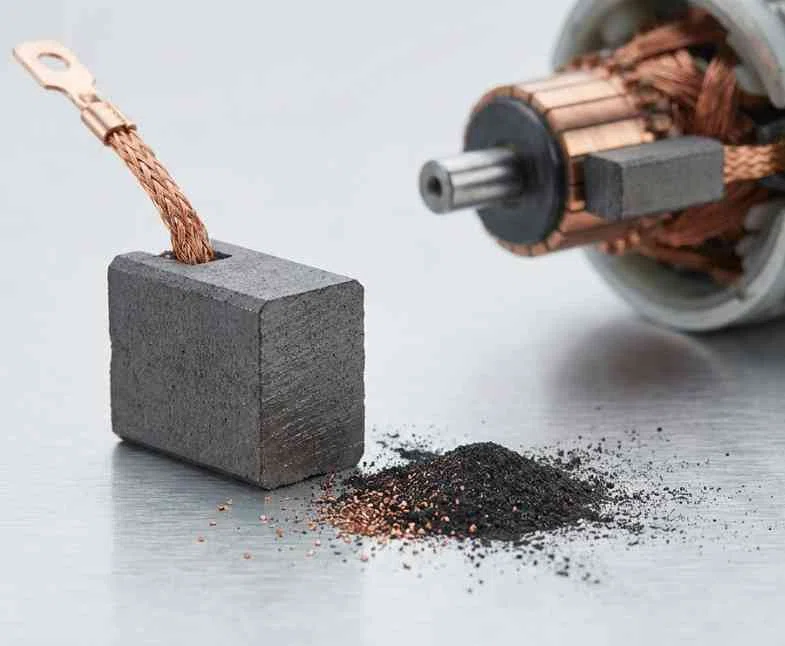
Sliding electrical contacts for transferring current in motors, generators, alternators and slip-ring systems. Selection depends on the machine, electrical load, speed, contact surface, brush dimensions and assembly design.
Carbon Vanes
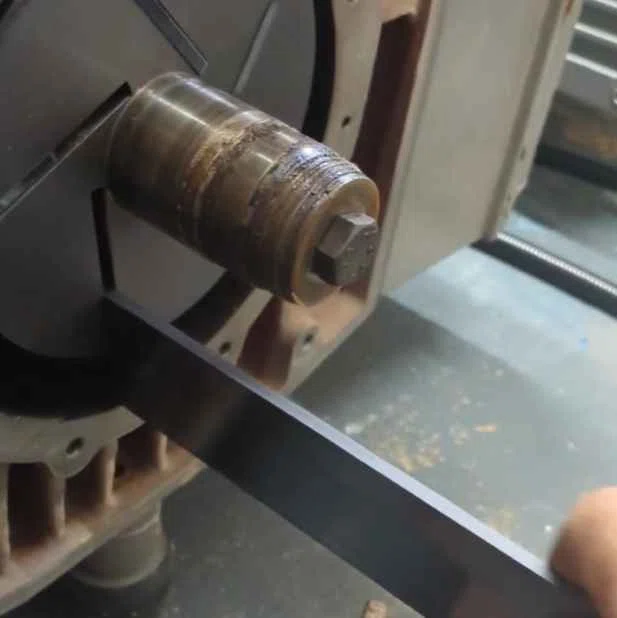
Precision carbon or graphite vanes for rotary vane vacuum pumps, compressors, air pumps and related gas-handling equipment. Geometry, material and rotor-slot fit must match the pump and operating mode.

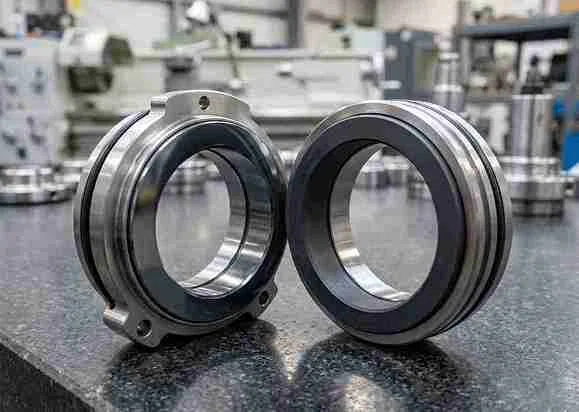
Carbon Seals
Carbon graphite faces, segmented rings and custom sealing components used within mechanical sealing and shaft-sealing arrangements. CARBOLVE supplies the carbon components rather than complete mechanical seal systems.
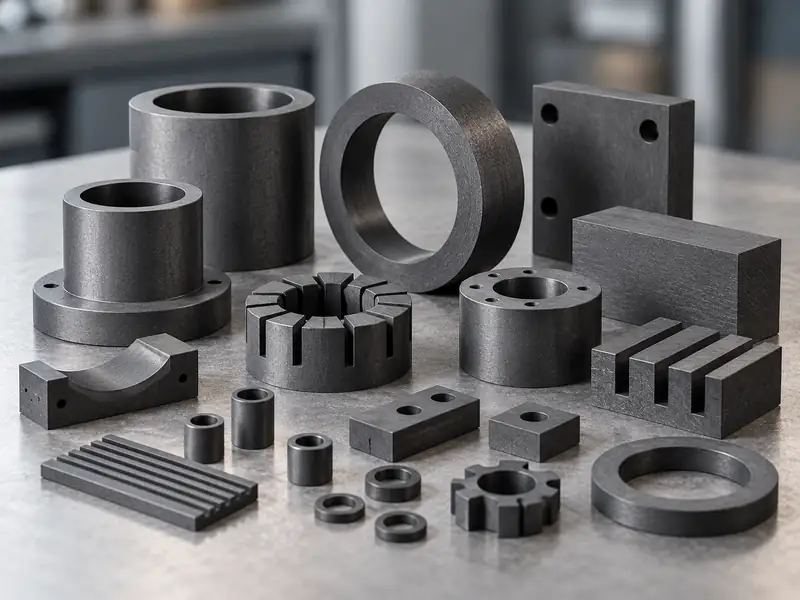
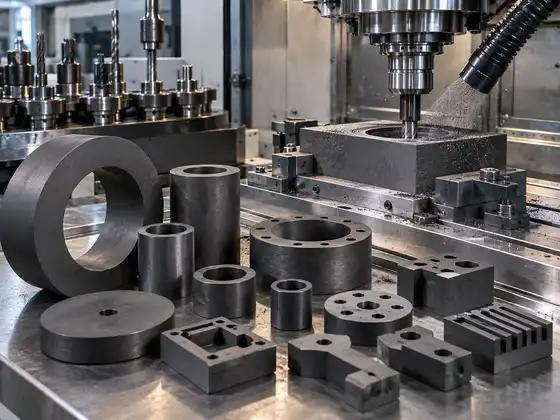
Graphite Parts
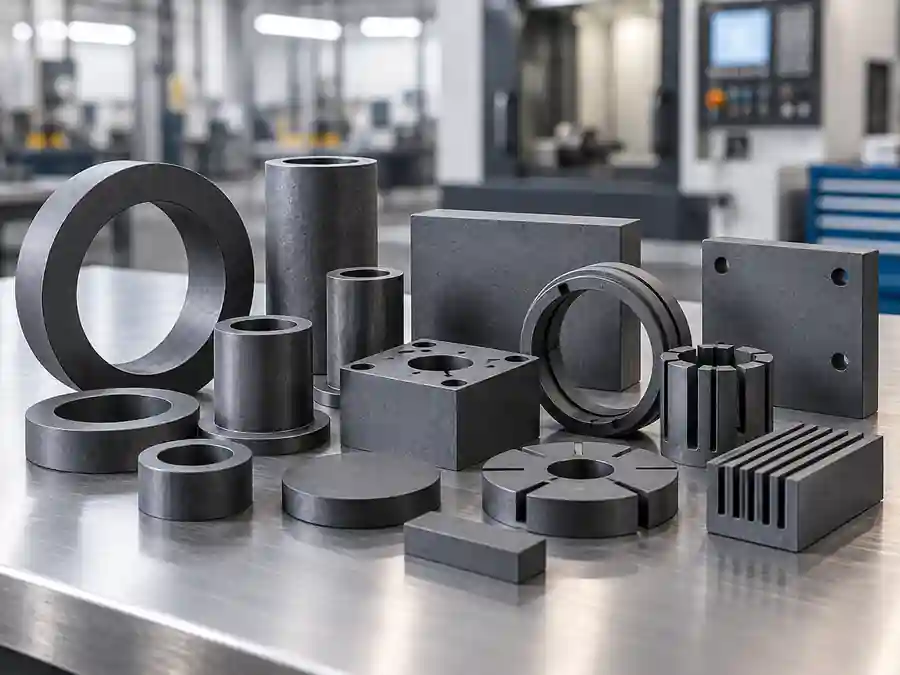
Bearings, bushings, rods, rotors and custom-machined graphite components for mechanical, thermal, electrical, wear and equipment-specific functions.
Start With the Required Function
Several carbon and graphite products may appear in the same machine, but they perform different jobs. Use the required function to identify the first product direction, then confirm the component against the actual equipment.
| Required Function | Typical Product Direction | Common Equipment | Information That Affects Selection |
|---|---|---|---|
| Transfer current to or from a moving surface | Carbon brush | Motors, generators, alternators and slip-ring systems | Machine type, voltage, current, speed, brush dimensions, holder and terminal |
| Create vacuum or move gas in a rotary chamber | Carbon vane | Rotary vane vacuum pumps, compressors and air pumps | Pump model, vane geometry, operating mode, speed, vacuum or pressure, temperature and humidity |
| Control leakage between moving and stationary parts | Carbon seal component | Pumps, compressors, mixers, turbines and other rotating equipment | Seal design, medium, pressure, temperature, shaft speed, counterface and face geometry |
| Support motion with application-specific sliding behavior | Graphite bearing or bushing | Pumps, rotating equipment and selected dry-running assemblies | Load, speed, shaft material, clearance, temperature and environment |
| Provide a custom wear, thermal or electrical component | Machined graphite part | Furnaces, EDM equipment, sintering systems and custom industrial machinery | Drawing, material grade, atmosphere, temperature, critical tolerances and quantity |
These directions are a starting point, not a universal material recommendation. The final component and material should be confirmed against the full operating system.

Carbon Brush Applications
Carbon brushes transfer electrical current between stationary and rotating parts. The same general function appears in different machines, but the required material, geometry, lead, terminal and contact face vary with the electrical and mechanical conditions.
Electric Motors
Carbon brushes are used in applicable DC motors, universal motors, wound-rotor systems and other brushed machines. Motor type, current, speed, duty cycle, holder fit and commutator condition should be reviewed together.
View Electric Motor BrushesGenerators & Alternators
Brushes provide current collection or excitation contact in generator, alternator and related slip-ring arrangements. Selection should consider current density, peripheral speed, ring or commutator condition and the complete brush assembly.
View Generator BrushesSlip-Ring Systems
Slip-ring brushes support power, grounding or signal-transfer functions according to the system design. Ring material, speed, electrical requirement, brush pressure and environment influence the product direction.
Explore Slip-Ring Carbon BrushesPower Tools & Appliances
Resin-bonded or other application-matched brush materials may be considered for high-speed universal motors used in power tools, mixers, vacuum motors and related equipment.
View Power Tool Carbon BrushesVacuum Motors & Industrial Blowers
Brushes for vacuum motors and blowers require review of speed, temperature, duty, dust, noise expectations and the existing commutator and holder condition.
View Vacuum Motor BrushesReplacement & Maintenance
A drawing, unworn sample, equipment model, part marking and operating information can be combined to identify a replacement direction. A worn brush alone may not reveal the original length or material.
Explore Replacement Carbon BrushesCarbon Vane Applications
Carbon and graphite vanes move inside rotor slots to divide the pump chamber as the rotor turns. Their dimensions, contact-edge geometry, surface condition and material direction affect movement, sealing and wear within the pump.
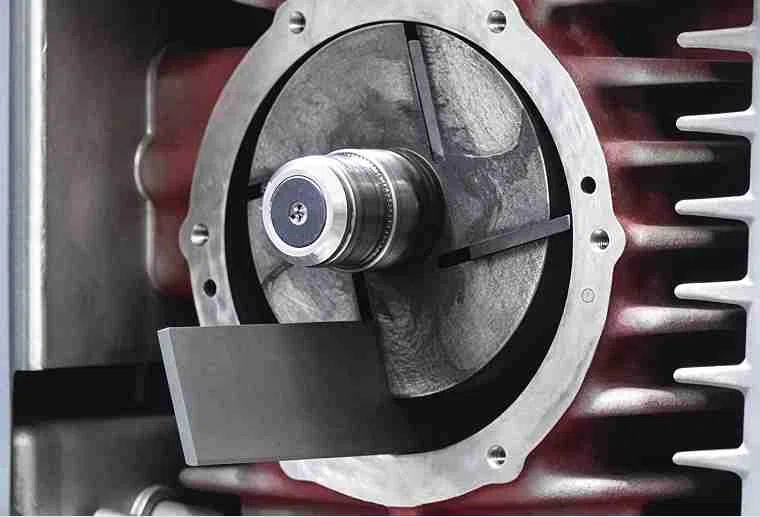
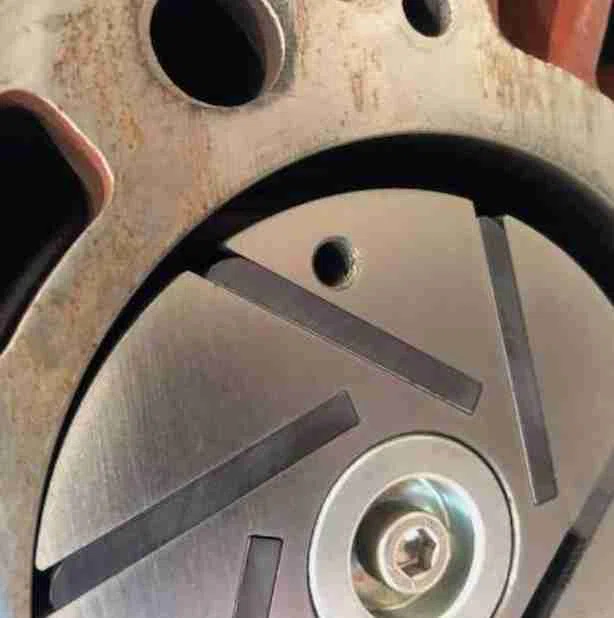
Rotary Vane Vacuum Pumps
Carbon vanes are used in dry-running rotary vane vacuum pumps where the vane geometry and material must match the rotor, chamber and operating conditions.
Explore Vacuum Pump VanesCompressors & Air Pumps
Compressor and air-pump vanes are evaluated according to gas type, pressure direction, operating mode, speed, temperature, humidity and required vane geometry.
View Compressor VanesPackaging Machinery
Vacuum pump vanes support vacuum generation in packaging equipment. Pump model, cycle pattern, filtration and operating environment should be reviewed before selecting a replacement.
View Packaging Machine Vacuum Pump VanesPrinting Machinery
Printing equipment may use rotary vane vacuum pumps for paper handling and related vacuum functions. Vane identification should begin with the pump rather than the printing-machine name alone.
View Printing Machine Vacuum Pump VanesCNC Vacuum Systems
CNC routers and holding systems may rely on rotary vacuum pumps. Confirm the pump model, vane dimensions, duty cycle, filtration and operating environment.
View CNC Router Vacuum Pump VanesMilking Machine Vacuum Pumps
Milking equipment can use rotary vane vacuum pumps that require model-specific vane dimensions and operating review.
View Milking Machine Vacuum Pump VanesReplacement & Custom Rotary Equipment
Existing part numbers, drawings, new or worn samples, pump photographs and operating data can be used together to evaluate replacement or non-standard vane production.
Explore Custom Carbon VanesCarbon Seal Applications
Carbon graphite components are used as seal faces, segmented rings and custom sealing parts within rotating equipment. Their performance depends on the complete sealing arrangement, including the mating surface, medium, pressure, temperature, speed, lubrication and installation.
CARBOLVE manufactures the carbon and graphite sealing components to confirmed requirements. Complete mechanical seal system design remains outside this product scope.

Industrial Pumps
Mechanical face seal rings operate against a mating face to help control leakage in pump sealing arrangements. Review the medium, pressure, temperature, shaft speed, counterface and face geometry.
Explore Pump Carbon Seal RingsCompressors
Segmented rings and other carbon sealing components may be used around shafts in compressor applications. Gas type, dry or lubricated operation, temperature, pressure, speed and clearance affect selection.
Explore Compressor Carbon Seal RingsMixers & Agitators
Mixing equipment may use mechanical seal faces or split carbon rings according to the shaft and sealing design. Medium, pressure, shaft movement, runout and component geometry should be confirmed.
View Mixer Mechanical Seal FacesTurbines & Rotating Equipment
Segmented carbon rings may be used in shaft-sealing arrangements for turbines and other rotating equipment. The ring construction, gas or steam conditions, temperature, speed and shaft interface require application-specific review.
Explore Turbine Carbon Seal RingsReplacement & Custom Sealing Components
Drawings, samples, equipment models and operating conditions can support the evaluation of replacement faces, segmented rings and non-standard graphite sealing parts.
Explore Custom Carbon SealsGraphite Part Applications
Industrial graphite parts are selected by function, material grade, geometry and operating environment. Not every graphite grade provides the same thermal, electrical, mechanical, chemical or sliding behavior.

Custom Wear, Thermal & Electrical Parts
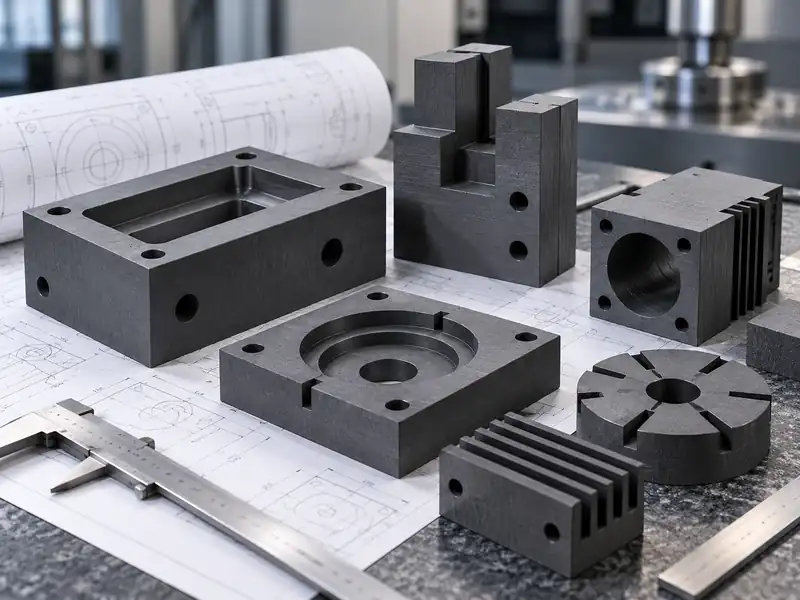
Non-standard graphite components can be machined from drawings, CAD data, samples or confirmed dimensions. The application must define the material direction, critical features and inspection requirements.
Explore Custom Graphite PartsBearings & Bushings
Graphite bearings and bushings may be considered for selected dry-running, immersed or application-specific sliding arrangements. Review load, speed, shaft material, clearance, temperature, medium and alignment.
Graphite Rotors
Graphite rotors are equipment-specific components whose geometry, material and operating conditions should be defined from the pump or machine design.
Explore Graphite RotorsEDM Electrodes
Machined graphite electrodes are used in electrical discharge machining. Material structure, electrode geometry, machining detail and the required EDM result influence the specification.
Explore EDM ElectrodesIndustrial Furnace Components
Graphite components may be used in suitable furnace environments where temperature, atmosphere, thermal cycling, oxidation exposure and part geometry are reviewed together.
Explore Graphite Furnace PartsGraphite Sintering Molds
Graphite molds and tooling for sintering applications require review of material grade, mold geometry, pressure, atmosphere, thermal cycle and surface requirements.
Explore Graphite Sintering MoldsMatch the Component to Its Operating Conditions
A product name identifies the general component. The operating data defines whether a particular material, geometry and construction can be evaluated for the equipment.

For Carbon Brushes
Confirm the motor or generator type, voltage, current, speed, duty cycle, commutator or slip-ring condition, brush dimensions, holder fit, contact face, lead and terminal.

For Carbon Vanes
Confirm the pump or compressor model, vane length, width and thickness, contact-edge geometry, dry or lubricated operating mode, gas, speed, vacuum or pressure, temperature and humidity.
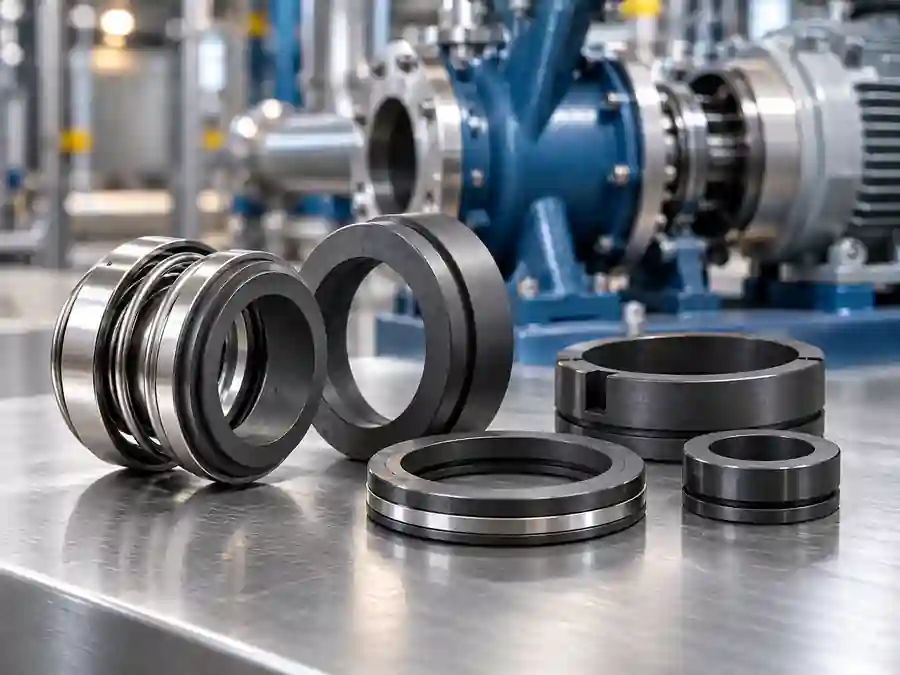
For Carbon Seals
Confirm the sealing function, component construction, medium, pressure, temperature, shaft speed, counterface, lubrication, diameters, thickness and sealing-face requirements.
For Graphite Parts
Confirm the component function, drawing, material grade if known, load, speed or movement, mating part, temperature, atmosphere, critical tolerances, surface requirements and quantity.
Avoid Application Mismatches Before Production
A Familiar Product Name Is Not a Complete Specification
“Carbon brush,” “carbon vane,” “carbon seal” and “graphite part” describe product families. The actual component still depends on its material, geometry, equipment interface and operating conditions.
A Worn Sample Can Hide the Original Geometry
Used brushes, vanes, seal rings and bearings may have lost material or changed shape during operation. Copying only the worn dimensions can reproduce the wear rather than the original component.
Material Codes Do Not Transfer Automatically
Grade numbers and commercial material names are manufacturer-specific. A similar name does not establish equivalent composition or performance.
One Missing Condition Can Change the Selection Direction
Speed, temperature, humidity, pressure, medium, atmosphere, mating material or lubrication can affect different carbon products in different ways.
From Application Data to a Manufacturable Component
One Focused Carbon & Graphite Portfolio
Carbon brushes, carbon vanes, carbon seals and machined graphite parts can be reviewed within one related product scope. This is useful when an equipment project contains more than one carbon or graphite component.
Drawing & Sample-Based Manufacturing
Projects can begin with a technical drawing, CAD file, physical sample, equipment model, part reference, confirmed dimensions or a combination of these sources.
Application-Specific Review
Each product family uses different selection inputs. Electrical data matters for brushes; pump and gas-handling conditions matter for vanes; medium and sealing conditions matter for seals; load, atmosphere and geometry matter for graphite parts.
Custom Geometry & Component Features
Machining can be evaluated for application-specific dimensions, holes, slots, grooves, bevels, radii, faces and other drawing-defined features.
Inspection Against Confirmed Requirements
Material identification, critical dimensions, surface and edge condition, assembly details where applicable, product identification, quantity and protective packaging can be checked against the agreed specification.
Manufacturing and Inspection for Carbon & Graphite Components
CARBOLVE’s manufacturing scope combines product-specific machining, carbon brush assembly where required, dimensional verification and shipment protection for brittle carbon and graphite components.
Machining & Finishing
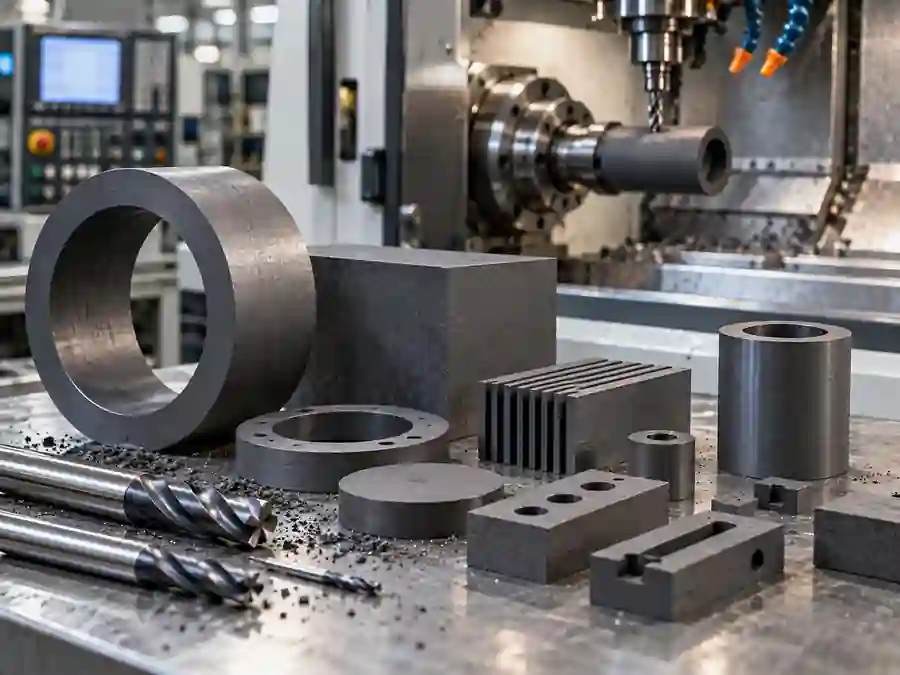
Turning, milling, drilling, grinding, grooving, slotting and application-specific finishing can be evaluated according to the component and drawing.
Brush Assembly
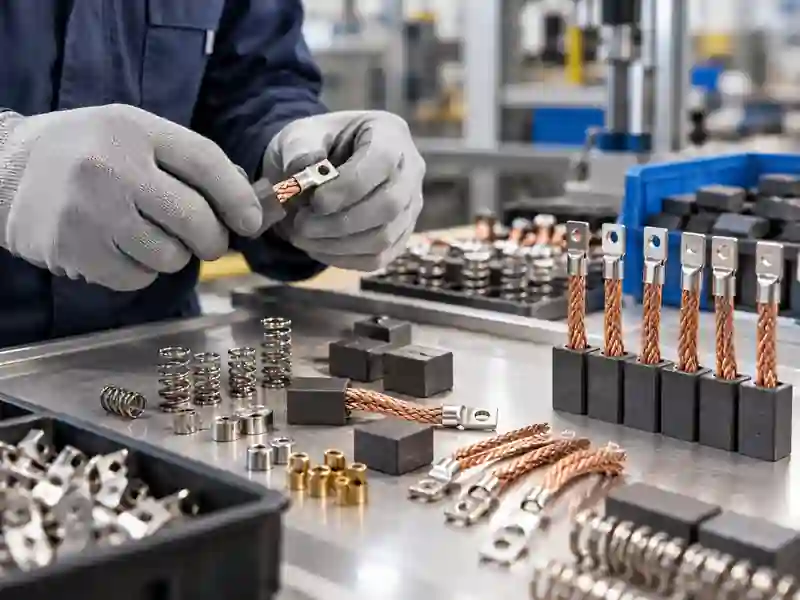
Leads, terminals, springs, caps and other brush assembly details are produced and checked according to the confirmed design where applicable.
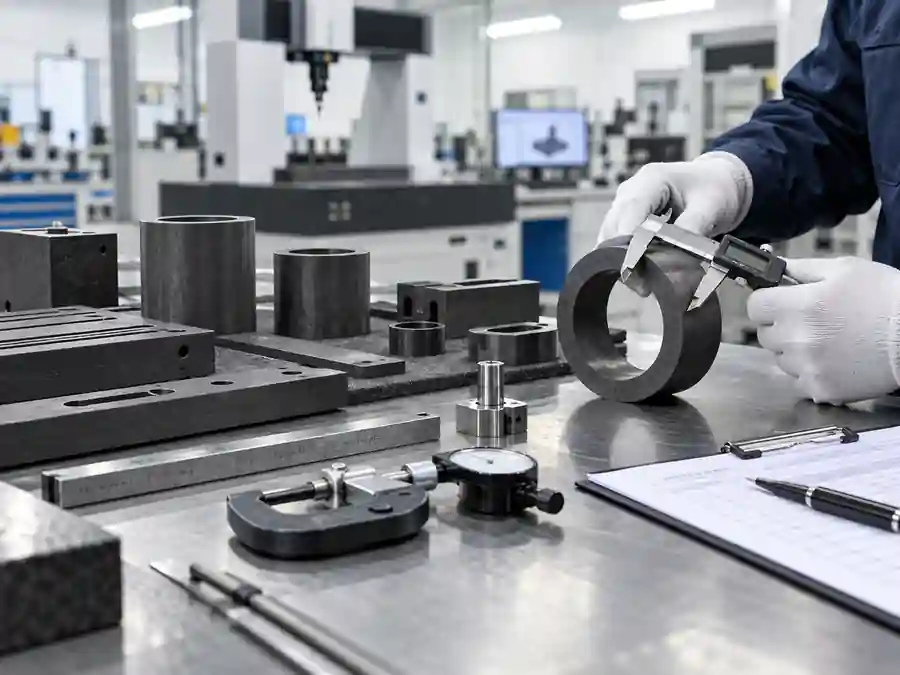
Dimensional & Surface Inspection
Critical dimensions, geometry, visible cracks, chips, edge condition, surface condition and agreed assembly details are reviewed according to the product requirement.
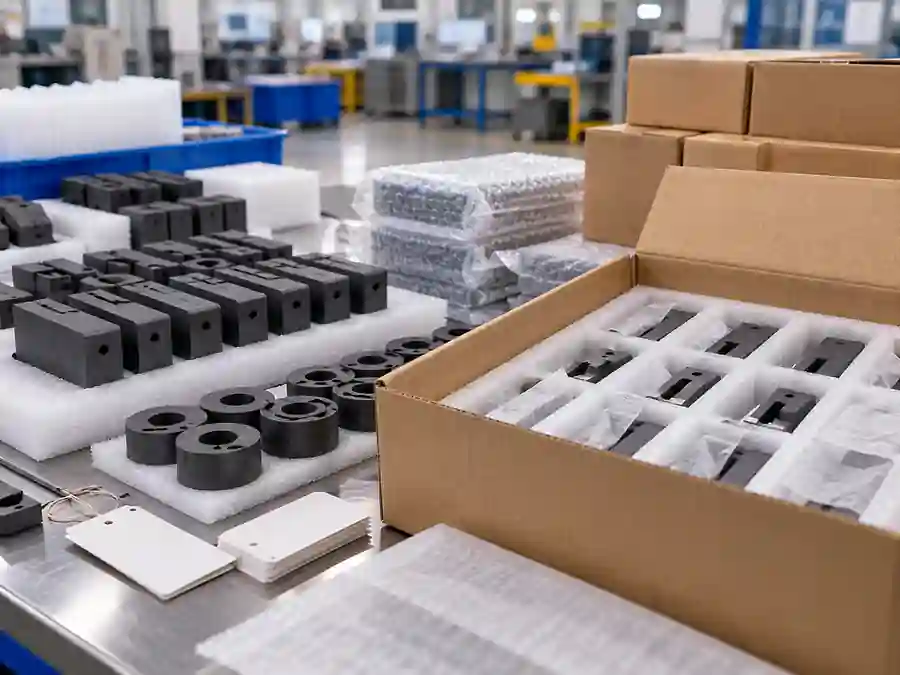
Identification & Packaging
Quantity, product identification and protective packaging are checked before shipment to reduce avoidable handling damage to carbon and graphite components.
Which product family should I start with?
Start with the component’s primary function:
- Electrical current transfer usually points to a carbon brush.
- Rotary vacuum generation or gas movement usually points to a carbon vane.
- Leakage control between moving and stationary parts usually points to a carbon sealing component.
- Dry-running support, custom wear, thermal, electrical or equipment-specific geometry may point to a machined graphite part.
The equipment design may contain more than one of these products, so confirm each component separately.
Can one carbon or graphite material be used for every application?
No. Carbon brush materials are selected for electrical contact and commutation requirements. Vane materials must suit the pump, gas, friction, wear and operating mode. Seal materials must be compatible with the sealing design, medium and counterface. Machined graphite parts may require different mechanical, thermal, electrical or atmosphere-related properties.
What information is most useful for an application review?
The most useful starting information is the product function, equipment manufacturer and model, drawing or sample, dimensions, existing markings, operating conditions and required quantity.
Then add the product-specific data:
Can CARBOLVE evaluate a replacement from a physical sample?
Yes. A physical sample can help identify geometry, assembly and visible construction. A sample may not reveal the original material grade or unworn dimensions, so it should be combined with equipment information, photographs, markings, operating data and any available drawing.
Does CARBOLVE supply complete mechanical seal systems?
CARBOLVE manufactures carbon graphite seal faces, segmented rings and custom sealing components. Complete seal-system engineering, including all mating components and operating-system validation, is not represented as part of this product scope.
When is a custom graphite part more appropriate than a standard graphite product?
A custom part is appropriate when the application requires drawing-specific geometry, non-standard dimensions, critical tolerances, holes, grooves, steps, mating features or a defined material and operating condition. Standard rods, blocks or plates are material shapes; the finished component must still be matched to its function.
Continue Your Product Evaluation
Discuss Your Carbon Application
Send the information currently available. A useful starting point may include the component function, equipment model, drawing or sample, dimensions, operating conditions and required quantity.
CARBOLVE can use this information to identify the relevant product family and evaluate the next technical and manufacturing questions.