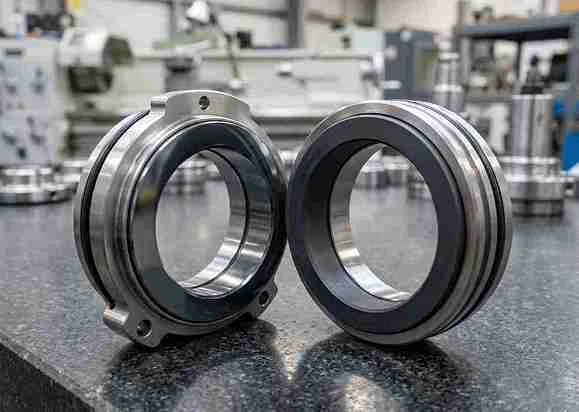
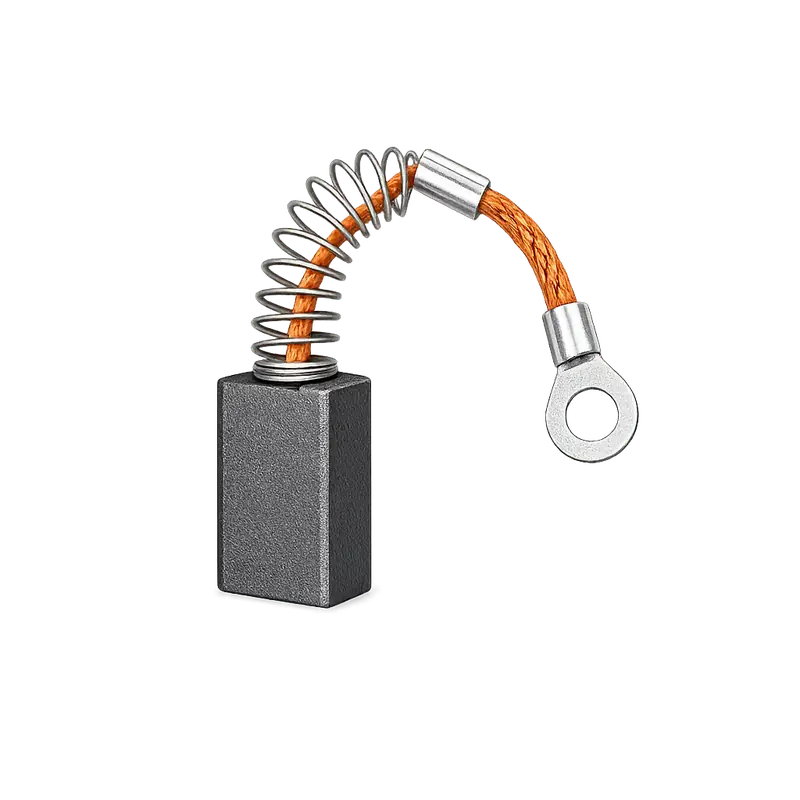
Graphite Carbon Brushes for Motors & Generators
CARBOLVE manufactures finished graphite carbon brushes for verified electric motors, industrial generators, commutators, and slip rings. We evaluate graphite-grade suitability based on your specific current, speed, contact-surface, and environmental parameters.
Technical Note: Graphite is a specific carbon-brush material category. It should not automatically be treated as the same material family as carbon graphite, electrographite, or metal graphite in technical brush selection.
- Custom Graphite Brush Manufacturing from Drawings or Samples
- Application-Based Material Review (Speed, Load, Environment)
- Custom Shunts, Terminals, and Multi-Section Designs
Send the machine type, existing material grade, brush dimensions, voltage, current, speed, and contact surface for evaluation.
Carbon & Graphite
Finished Products Manufacturer
Drawing & Sample
Technical Evaluation
Custom Construction
Shunts, Terminals, Geometry
Quality Control
Inspection Before Shipment
Graphite Carbon Brushes for Different Electrical Applications
Graphite brush selection depends on material grade, electrical function, current, speed, contact diameter, brush pressure, and operating environment. We configure brushes for verified requirements.

Low-Friction Graphite
Selected graphite grades engineered for low-friction sliding behavior in verified applications.

High-Speed Graphite
Specific graphite grades evaluated for high-peripheral-speed continuous sliding requirements.

Generator Brushes
For verified generators where a soft or specific graphite grade suits vibration and current profiles.

Commutator Brushes
For applicable segmented commutator systems requiring an appropriate film-forming graphite grade.
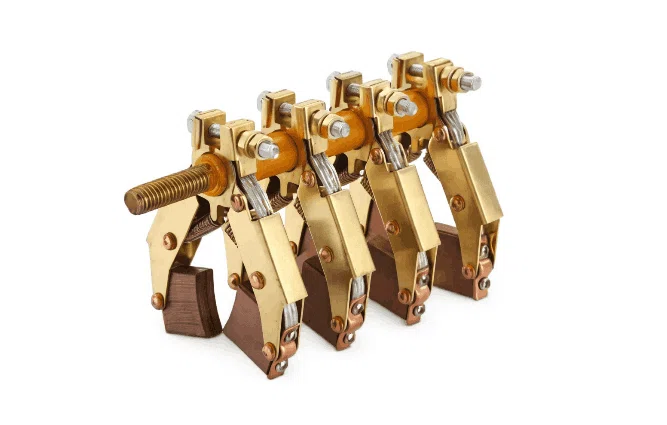
Slip-Ring Brushes
For selected continuous-ring applications based on current per brush and ring material.
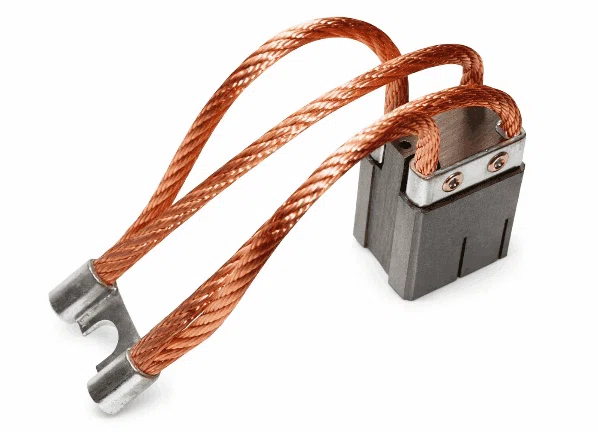
Industrial Brushes
Manufactured for verified industrial rotating equipment and demanding service conditions.

Replacement Brushes
Identify replacements via existing grade, OEM number, physical sample, or dimensional data.

Custom Configurations
Non-standard dimensions, custom contact faces, specialized shunts, terminals, and multi-sections.
What Are Graphite Carbon Brushes?
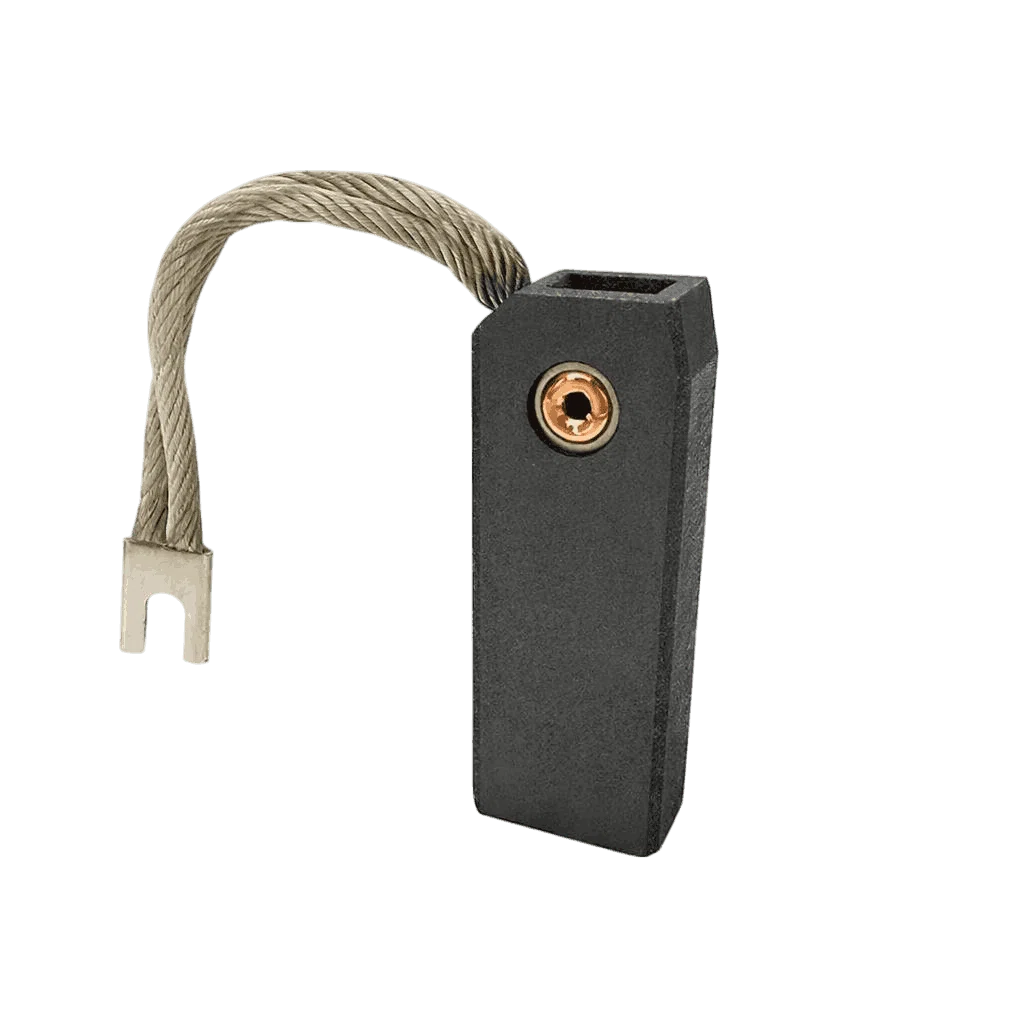
Graphite carbon brushes are sliding electrical contacts manufactured from suitable graphite-rich brush grades for current transfer between stationary and rotating components. Depending on the specific grade and machine design, they may operate against a segmented commutator or a continuous slip ring.
The term "graphite" identifies the material direction, but the brush geometry, shunt construction, and terminal configuration remain highly machine-specific. Not every carbon brush is technically a graphite-category brush, and not every graphite grade is interchangeable.
Graphite Carbon Brushes vs Carbon Graphite Brushes
The phrases look similar but should not automatically be treated as technically identical. "Graphite carbon brushes" is a commercial term commonly used when searching for carbon brushes made from graphite-rich materials.
Graphite Brush
The technical direction for graphite-rich electrical brush grades. Selected for sliding-contact applications requiring characteristics such as low friction, specific film formation, or high peripheral speed (grade dependent).
Carbon Graphite Brush
A separate technical material category in many industrial classifications. We do not use "Graphite" and "Carbon Graphite" as automatic technical synonyms merely because the words are reversed.
Visual Material Hierarchy:
- Carbon Brush Materials
- ├── Carbon Graphite
- ├── Graphite
- ├── Electrographite
- ├── Metal Graphite (Copper/Silver)
Material terminology varies between suppliers. Grade-specific technical data is more reliable than the general family name.
Manufacturing Graphite Carbon Brushes
How Are Graphite Brush Materials Generally Produced?
This explains general material-manufacturing principles and does not represent CARBOLVE's in-house raw-material process unless verified.
How CARBOLVE Manufactures Finished Brushes
We purchase qualified graphite material blocks and perform precision machining and assembly to create the final component.
- Incoming Material Identification & Verification
- Precision Machining (Thickness, Width, Length)
- Contact-Face Machining (Radii, Bevels, Grooves)
- Shunt Installation & Terminal Assembly
- Top-Pad or Spring Assembly (where verified)
- Product Marking (Grade, Part, Batch)
- Dimensional & Visual Inspection
How Do Graphite Carbon Brushes Transfer Current?

On a Commutator
- The brush holder guides the graphite brush.
- The spring maintains contact with the segmented commutator.
- Current transfers across the brush/contact interface.
- The commutator performs mechanical switching in the rotating circuit.
- Brush material influences friction, film, contact drop, wear, and commutation.

On a Slip Ring
- The graphite brush contacts a continuous ring.
- Current passes between stationary and rotating circuits.
- The ring does not perform segmented mechanical commutation.
- Material selection depends heavily on current, peripheral speed, ring material, pressure, and environment.
Key Characteristics of Graphite Brushes
Friction Behavior
Selected graphite grades are often considered where low-friction sliding behavior is important. Not all grades share the same coefficient.
Electrical Resistivity
Varies considerably by graphite grade, dictating how the material handles electrical flow and internal heating.
Contact Voltage Drop
Influences electrical losses. Graphite does not universally have lower contact drop than metal graphite.
Film-Forming Behavior
Certain grades develop contact films useful in particular commutator or slip-ring environments to stabilize contact.
Speed & Current Capability
Rated current and allowable peripheral speed are highly grade and application dependent. No universal maximum exists.
Environmental Response
Humidity, temperature, dust, oil, and chemicals can drastically change brush and contact behavior.
Custom Graphite Carbon Brush Specifications
Brush Dimensions & Body
| Thickness / Width | Drawing, sample, or holder dimension |
| Length | Original or unworn length where possible |
| Contact Face | Flat, radiused, beveled, grooved, custom |
| Chamfer/Groove | Drawing dependent |
| Sections | Single or multi-section construction |
Shunt & Terminal
| Shunt Quantity | None, single, dual, or multiple |
| Shunt Position/Length | Confirm reference points & drawing |
| Shunt Insulation | Where required by application |
| Terminal Type | Lug, ring, flag, fork, or custom |
| Terminal Orientation | Required for installation fit |
Spring & Holder
| Holder Dimensions | Required for proper brush fit/clearance |
| Spring Type | Existing design required for replacement |
| Brush Pressure | Verified machine requirement |
| Installation Angle | Machine dependent (radial, trailing, etc.) |
| Brush Quantity | Per machine or contact track |
Graphite Brush Technical Data Framework
CARBOLVE evaluates properties such as Density (g/cm³), Electrical Resistivity, Hardness, Flexural Strength, Contact Voltage Drop, and Friction Coefficient based on the verified material grade. We do not populate generic tables using competitor material data.
Information Required to Select a Graphite Grade
Graphite grade selection should not be based on machine power, color, or brush dimensions alone.
Electrical Parameters
- Voltage & Current per brush
- Total brush current
- Duty cycle & Load variation
- Starting conditions
Commutator / Ring
- Contact diameter & RPM
- Surface finish & Film condition
- Ring material (for slip rings)
- Existing grooving or wear
Holder & Spring
- Holder internal dimensions
- Brush movement clearance
- Spring type & condition
- Approved brush pressure
Environment
- Temperature & Humidity
- Dust or Oil contamination
- Chemicals or Corrosive gases
- Ventilation & Vibration
Why Surface Film Matters
The brush operation is affected by the complete interface. A surface film influences friction, contact voltage drop, and wear. Do not assume every dark film is good, or that bright bare copper is always desirable. Surface condition must be interpreted with machine operating data.
Comparing Graphite with Other Carbon Brush Materials
Graphite vs Electrographite Brushes
Electrographite is a highly graphitized electrical carbon material family manufactured through a high-temperature graphitization process. It is broadly used in modern motor/generator applications.
Graphite brushes are a separate category often selected for specialized low-friction, high-speed, or specific film conditions where suitable. Graphite is not simply a lower-grade version of electrographite, and electrographite is not automatically a performance upgrade. Interchangeability is not automatic.
Compare Electrographite Brushes →Graphite vs Copper Graphite Brushes
Copper Graphite is selected for lower electrical resistance, higher conductivity, and selected lower-voltage/higher-current service. It introduces considerations like conductive wear debris and ring interaction.
Graphite grades may prioritize sliding behavior, lower friction, or high-speed contact over raw conductivity. Higher conductivity does not automatically mean better brush performance. Selection depends on current, voltage, speed, and heat.
Compare Copper Graphite Brushes →Graphite vs Silver Graphite Brushes
Graphite brushes are selected for grade-specific electrical and sliding characteristics. Silver graphite is a specialized metal-containing material selected when very low electrical resistance, signal-transfer performance, or grounding requirements justify silver content. Do not describe silver graphite as a premium replacement for ordinary graphite motor brushes.
Natural Graphite vs Artificial Graphite Materials
The source of graphite alone (natural vs synthetic/artificial) does not determine final brush performance. Binder, processing, treatment, grade formulation, brush construction, and machine conditions dictate performance. We evaluate the final finished brush properties rather than relying solely on raw-material origin claims.
Common Graphite Brush Problems & Troubleshooting
Existing Grade is Obsolete
CARBOLVE Response: We review the original grade, machine, dimensions, operating conditions, and physical sample. We do not promise exact grade equivalence based only on the code without verification.
Same Size but Different Performance
Possible Reasons: Different material grade, electrical resistivity, friction, film behavior, contact voltage drop, shunt construction, or pressure.
| Symptom | Possible Contributing Factors | Information to Check |
|---|---|---|
| Rapid Wear | Grade, speed, pressure, current, surface roughness, contamination | Operating data and wear pattern |
| Excessive Sparking | Brush grade, poor seating, electrical fault, commutator condition | Brush face and machine condition |
| High Contact Drop | Material, pressure, film, contamination, connection | Electrical data and contact surface |
| Uneven Wear | Unequal spring pressure, alignment, runout, current sharing | Complete brush set and holders |
| Brush Chipping | Vibration, mechanical impact, incorrect holder fit, surface irregularity | Brush edges and vibration data |
Graphite brush symptoms may also originate from the brush holder, spring, commutator, slip ring, armature, alignment, ventilation, or power supply. Send Brush Photos for Evaluation →
Custom Graphite Brushes for OEM & Industrial Projects
CARBOLVE evaluates new motor projects, generator projects, existing OEM drawings, and replacement requirements. We offer drawing-based manufacturing, sample-based reproduction, and custom dimensions including contact-face radii, bevels, grooves, shunts, terminals, and multi-section designs.
Final material grade, product geometry, electrical capability, inspection requirements, and commercial terms are confirmed after technical review.
How to Identify a Replacement
By Existing Grade or OEM Number
Provide marking, machine model, or data sheet. A grade number alone does not establish cross-brand equivalence.
By Dimensions & Construction
Provide thickness, width, length, shunts, terminals, and section count.
By Physical Sample
A worn sample helps identify geometry but may not reveal original length or approved operating limits. Provide operating data alongside the sample.
Why Source from CARBOLVE?
-
Material Classification Review
We evaluate if the project requires graphite, electrographite, carbon graphite, or metal graphite.
-
Application-Based Review
Review considering current, speed, contact surface, pressure, and environment.
-
Inspection Before Shipment
Verified checks for material, dimensions, surface, shunts, and terminals.
Frequently Asked Questions
Is graphite carbon the same as carbon graphite?
Are graphite brushes low friction?
Are graphite brushes suitable for high-speed applications?
Can CARBOLVE cross-reference another manufacturer's graphite grade?
Does replacing the graphite brush always solve sparking?
Need Graphite Carbon Brushes for an OEM or Replacement Project?
Complete material, dimensional, electrical, mechanical, contact-surface, and operating information helps CARBOLVE evaluate material direction, brush construction, manufacturing feasibility, and quotation details.
What Information is Needed for a Quote?
Not every item is required for every inquiry. Provide all information currently available.
- Machine / Motor type
- Existing brush grade
- Brush dimensions
- Commutator or slip ring
- Voltage & Current
- RPM / Speed
- Required quantity
- Drawings or photos