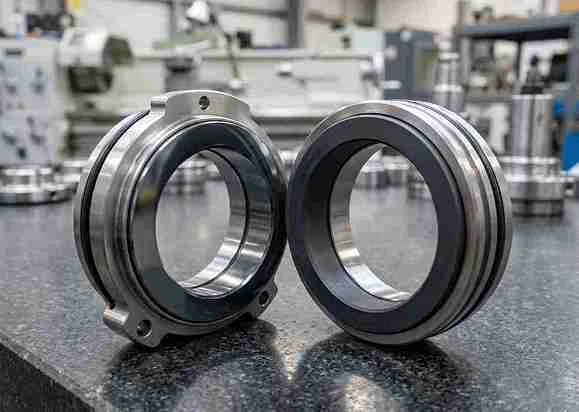
EDM Graphite Electrodes
Graphite blanks for in-house electrode machining, or custom electrode geometry evaluated from your drawing.
CARBOLVE supports graphite material selection and drawing-based component production for sinker EDM projects. Define the supply form, electrode detail and machining requirements together, with material suitability reviewed for the intended process.
Choose What Arrives at Your Workshop
The same material direction may be considered for different supply forms. Start by deciding whether your team will machine the electrode or purchase a component made to an agreed electrode drawing.

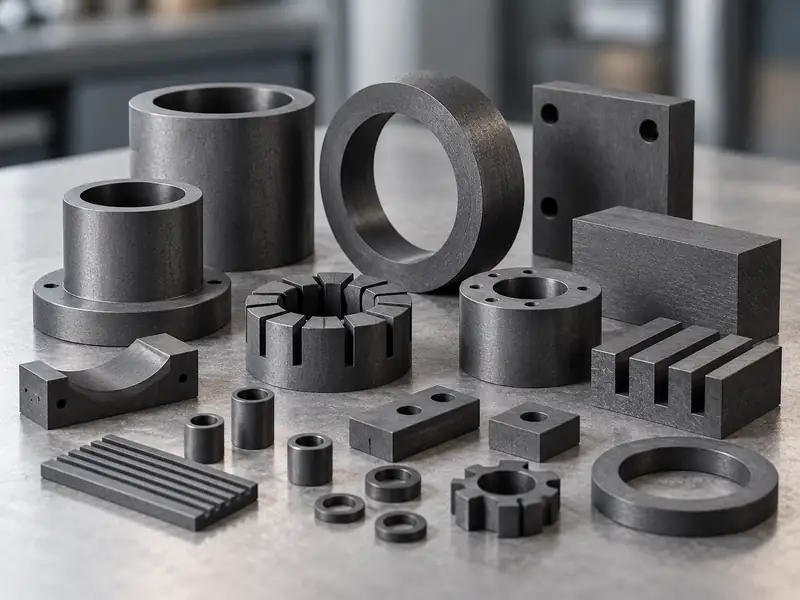
EDM Graphite Blocks & Plates
Rectangular graphite starting forms for customers machining their own electrodes.
The purchasing specification covers length, width, thickness, material reference and delivery condition. Allowance for subsequent machining should be distinguished from the finished electrode dimensions.
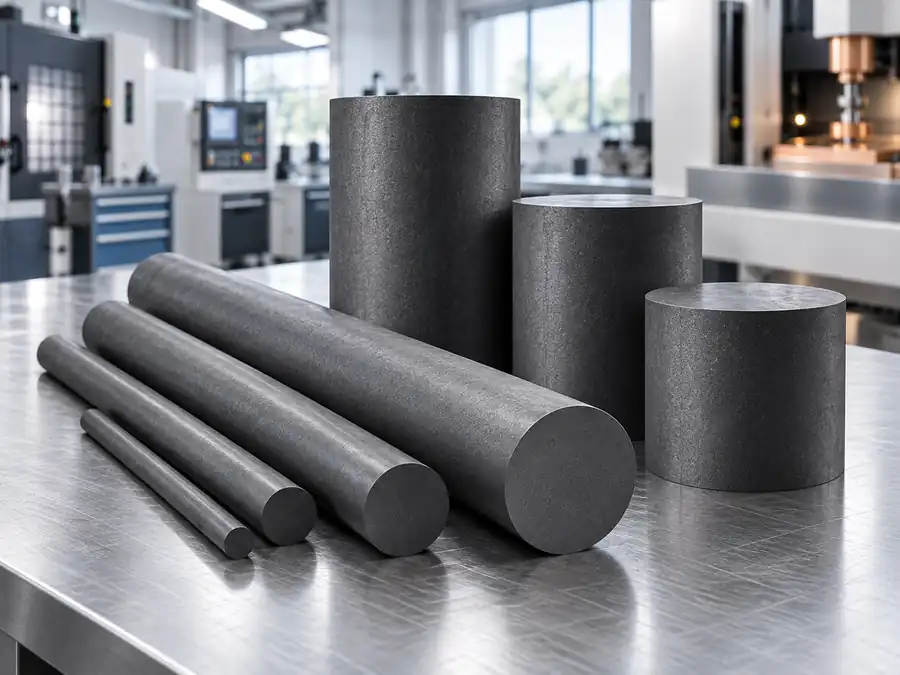
EDM Graphite Rods & Round Blanks
Round graphite starting forms for electrode designs developed from a circular section.
Diameter, length and material direction define the starting specification. A round blank does not automatically include a finished working profile, mounting features or a holder.
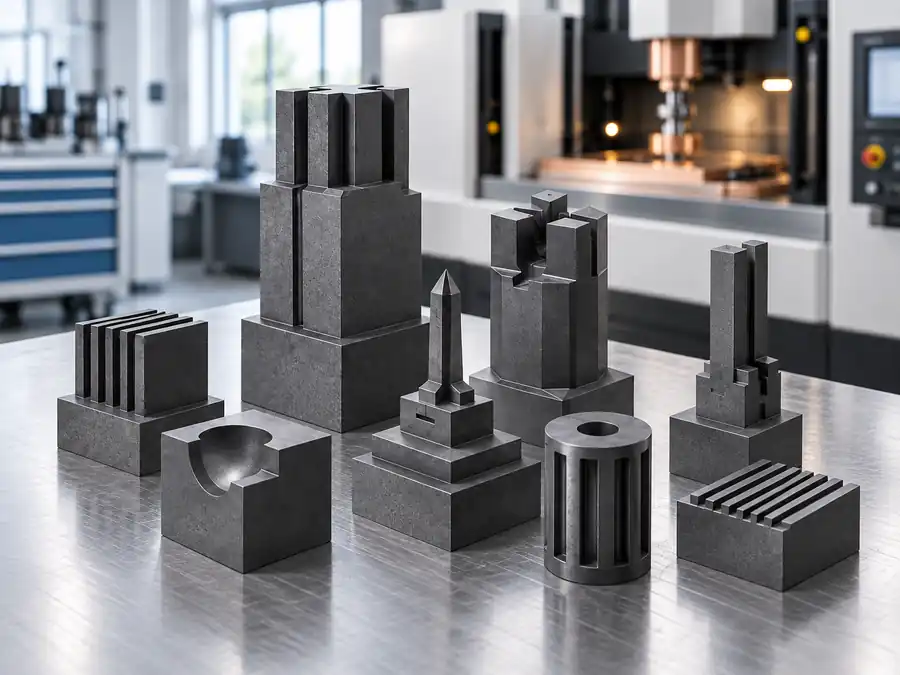
Custom Machined EDM Graphite Electrodes
Graphite electrode components evaluated for production from an agreed drawing or model.
Review covers the working profile, reference surfaces, critical features and inspection requirements. The electrode definition must distinguish finished geometry from any remaining customer machining or setup work.
Specify the Electrode Around the Finished Feature
A graphite grade must work through two stages: machining the electrode and producing the required feature by electrical discharge.
A material that is convenient to machine is not automatically the best choice for every burn. Electrode geometry, workpiece material, finishing requirements and the machine process need to be considered together.
Process illustration. Electrode geometry includes the allowances defined for the EDM process.
| Project priority | What matters | Practical selection response |
|---|---|---|
| Removing material from a large cavity | Removal rate, electrode consumption and the overall machining sequence. | Separate roughing and finishing requirements rather than choosing solely by the finest available grain description. |
| Producing narrow ribs or detailed features | Grain structure, mechanical strength, edge integrity and machinability. | Review the smallest electrode features and their support, not only the overall block dimensions. |
| Achieving a specified cavity finish | Electrode material, electrode surface condition and finishing parameters. | Define the required result on the workpiece separately from the finish of the graphite electrode. |
| Repeating an established job | Material identification, drawing revision and consistent acceptance criteria. | Keep the approved material reference and electrode definition controlled between orders. |
Resolve Three Common Purchasing Mismatches
A blank quoted to finished dimensions may leave insufficient machining allowance. CARBOLVE reviews the starting form and required delivery geometry before production.
A cavity model is not always an electrode model. The quotation should establish who defines spark-gap allowance, orbit compensation and the electrode’s working profile.
A familiar grade name is not proof of equivalent performance. Material selection should be supported by comparable properties and a representative process trial where required.
CARBOLVE Material References for EDM Review
These references provide starting points for discussing graphite material. They do not replace an agreed material specification or establish a guaranteed EDM result.
| CARBOLVE reference | Material direction | Intended selection discussion | What remains to be established |
|---|---|---|---|
| CVG-FG30 | Fine-grain graphite | An initial reference for fine EDM electrodes and detailed graphite machining. | Feature requirements, available blank size, material acceptance and process suitability. |
| CVG-FG40 | Finer-detail graphite direction | Review for more demanding electrode detail and finishing requirements. | Feature integrity, machining feasibility and performance on the intended EDM process. |
| CVG-ISO35 | Fine-grain isostatic graphite | An alternative material direction for precision electrode and component review. | Required properties, geometry and suitability relative to other candidate materials. |
Grain Structure and Forming Route Describe Different Things
“Fine-grain” describes the material structure; “isostatic” describes its forming route. An isostatic graphite can also be fine-grained. Grade labels should therefore be compared through their defined properties, not treated as interchangeable specifications.
Density alone does not establish electrode performance. Grain structure, strength, hardness, electrical resistivity and the actual machining conditions all contribute to the decision.
Material Status Note
Material properties are currently managed as development targets for preliminary selection. Final supply specifications and acceptance requirements are agreed for each project. Electrode wear, removal rate and achieved surface finish require validation under the intended machine and process conditions.
A Defined Supply Scope, From Blank to Drawing-Based Component
Keep Your Existing Electrode-Making Workflow
Blocks, plates and round blanks provide starting forms for customers retaining electrode machining in-house. Dimensions and delivery condition are agreed around the next operation.
Bring Geometry and Material Into One Review
For custom components, CARBOLVE evaluates drawings, models, physical samples and application information together. Material direction and component geometry form part of the same production discussion.
Establish the Part Definition Before Production
An agreed drawing, material reference and inspection scope make the order easier to evaluate and repeat. This is particularly important when the electrode includes detailed working features or differs from the final cavity geometry.
Graphite Machining and Component Inspection
CARBOLVE’s machining scope includes grinding, drilling, slotting, surface finishing and drawing-based custom geometries.
The component workflow includes incoming material review, in-process checks, surface inspection and final verification. Agreed dimensions, appearance and packing requirements are checked before dispatch.
Component inspection confirms conformity to the agreed part requirements. It does not, by itself, establish the electrode’s performance during EDM.
Protective packing and technical communication support international orders. Any additional material testing or documentation should be defined before production.
EDM Graphite Buying Guide
Review these common questions to help define your graphite electrode sourcing requirements effectively.
1. Specifications to compare
2. Roughing vs. finishing grades
3. CNC machine compatibility
4. Custom electrode definitions
5. Evaluating replacement grades
6. Pricing and fair comparison
1. Which specifications should I compare before ordering?
Begin with the material reference, supply form and dimensions. Then compare the properties relevant to electrode manufacture and use.
| Specification | Why it belongs in the comparison |
|---|---|
| Grain size and structure | Relevant to achievable detail, edge condition and surface finish. |
| Flexural strength and hardness | Help assess fragile features, handling and electrode machining. |
| Electrical resistivity | Provides an electrical material property for comparison, but does not alone predict machining speed. |
| Density and porosity | Help describe the material structure; neither is a standalone quality ranking. |
| Blank size and delivery condition | Determine whether the material suits the planned electrode-making operation. |
Compare values using consistent units and test definitions. Development targets, typical values and guaranteed acceptance limits are different types of information.
2. Should roughing and finishing use the same grade?
Not necessarily. Roughing emphasizes material removal and electrode consumption, while finishing places greater weight on detail and the required workpiece surface.
One grade may be suitable for both stages in a particular job, but that should be established through the process requirements. Buying the finest-described material for every operation can overlook blank cost, electrode-making effort and the actual finish needed.
Within CARBOLVE’s selection references, FG30 provides an initial fine-EDM discussion point, while FG40 and ISO35 offer directions for more demanding detail review. These are not guaranteed roughing or finishing classifications.
3. Does an EDM graphite electrode fit any CNC machine?
“CNC” describes machine control, not the machining process.
A CNC milling machine may manufacture the graphite electrode. A sinker EDM machine uses a shaped electrode to machine an electrically conductive workpiece. Wire EDM uses a moving wire electrode.
For milling, review the machine’s suitability for graphite, including dust control and tooling. For sinker EDM, review the electrode interface, workpiece material and applicable machine technology. A graphite material grade does not establish holder compatibility or supply an approved parameter set.
4. What must be defined for a custom-machined electrode?
Identify whether the supplied model represents the finished cavity or the electrode itself. The final electrode definition should establish:
- Working profile and drawing revision.
- Datum and mounting geometry.
- Critical features and dimensional requirements.
- Responsibility for spark-gap and orbit allowances.
- Material reference and inspection criteria.
- Any remaining customer machining or setup work.
CARBOLVE evaluates manufacturing against the agreed electrode definition. Holders, presetting and machine-specific setup are not automatically included.
5. How should I evaluate another brand or a proposed replacement grade?
A similar density, grain description or grade number is not enough to establish equivalence.
Compare material properties and electrode-making behavior, then assess the result under representative conditions. A useful comparison records the workpiece material, electrode geometry, machine settings, dielectric and flushing conditions alongside wear, removal rate and surface finish.
Reviews can provide context, but they may describe a different machine or application. CARBOLVE references should be evaluated on their own specification and validation results, not presented as direct equivalents to another supplier’s grades.
6. What determines price, and how can I compare suppliers fairly?
Separate the price of graphite material from the price of a machined electrode.
For blanks, dimensions, grade, quantity, machining allowance and delivery condition affect the quotation. For custom electrodes, working geometry, fragile features, tolerances and inspection requirements add to the manufacturing scope.
Compare quotations on the same deliverable and destination. Include electrode fabrication and process consumption in the purchasing decision, rather than comparing only price per kilogram.
For international sourcing, establish who supplies the material, who machines the electrode and what documentation accompanies the order. CARBOLVE’s quotation should define the agreed graphite component scope and commercial terms; local stock and fixed delivery times should not be assumed.
Related Graphite Products and Capabilities
Request a Quote for EDM Graphite
Tell us whether you need blocks and plates, round blanks or a drawing-based electrode. Include the dimensions, quantity and material reference if known.
For custom electrodes, share the electrode drawing or model details and the required delivery geometry. For material discussion, include the workpiece material, EDM stage and intended surface finish.
Email us directly
sales@carbolve.com
Call us
+86(513)-81100106