Carbolve Logo
CARBOLVE carbon vanes for dry rotary vacuum pump replacement projects
Compatible Replacement & Custom Carbon Vanes

Orion Vacuum Pump Vanes

CARBOLVE manufactures model-matched carbon vanes for selected Orion KRF dry pumps, KHA/KHH/KHF high-vacuum pumps, legacy K-series equipment and CBF/CBX/CBXP combination dry pumps. Each request is reviewed against the complete model, vane geometry, set configuration, original material and operating conditions before quotation.

Model Review · Drawing or Sample Matching · Custom Machining · Inspection Before Shipment

Compare Orion Vane Categories

Compatible Carbon Vanes for Selected Orion Dry Pumps

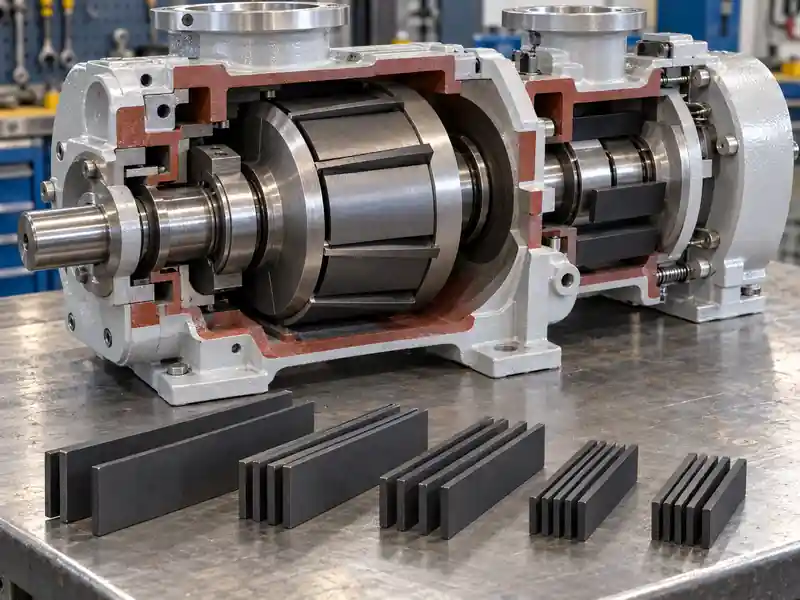
Carbon vanes slide inside the rotor slots and contact the pump cylinder as the rotor turns. Correct operation depends on the relationship between vane material, dimensions, edge geometry, rotor-slot clearance, pump temperature and vacuum or pressure duty.

An Orion family name is a useful starting point, but it does not identify every vane detail. Different models can use different vane quantities, dimensions, part references or pump-unit arrangements.

CARBOLVE evaluates replacement and custom vane projects from the complete pump model, original part number when available, drawing, physical sample and operating data. This supports current equipment, discontinued models, planned maintenance and repeat-order programs without assuming universal interchangeability.

Trademark note: Orion is a trademark of its respective owner. CARBOLVE is an independent manufacturer and is not affiliated with or endorsed by Orion. Model names and part numbers are used only for compatibility identification.

Rotor-slot-vane working diagram for dry pumps

Orion Replacement Carbon Vane Range

Choose the pump family and operating role first, then confirm the complete model, suffix, vane quantity and dimensions. Series references identify the project but do not establish interchangeability.

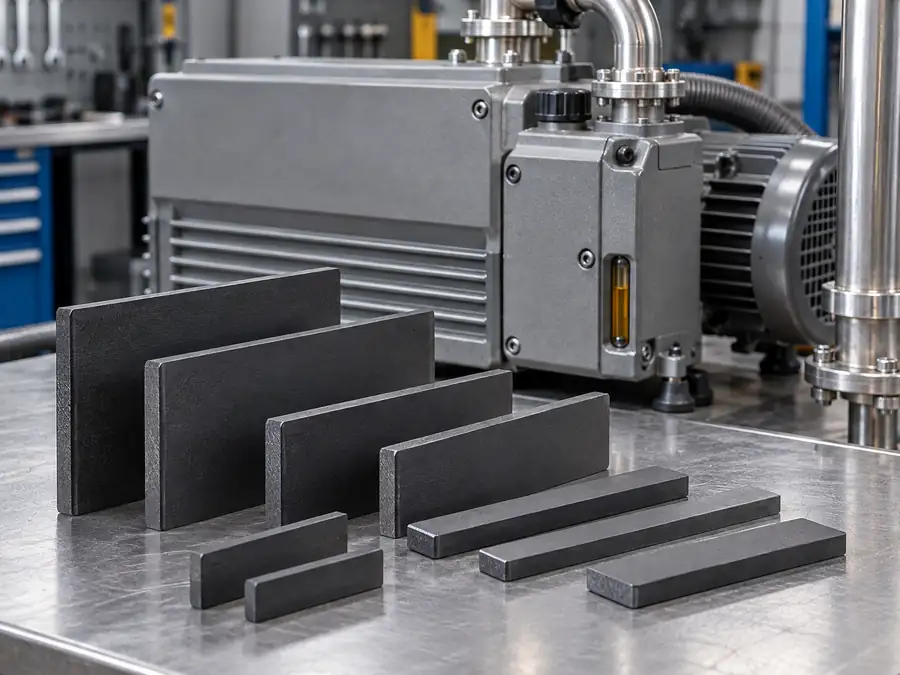
Carbon vane profiles for Orion KRF dry pump replacement projects

Orion KRF Standard & Heavy-Duty Dry Pump Carbon Vanes

KRF Compact · KRF Standard · KRF Heavy-Duty Models

Model-matched carbon graphite vanes for selected KRF oil-free rotary vane dry pumps. KRF equipment may be configured for vacuum or pressure operation, so the complete model and actual operating duty must be reviewed together.

Selection cue: Confirm the full model and suffix, V/B configuration where applicable, number of vanes per set, complete dimensions, speed, vacuum or pressure, temperature, humidity and duty cycle.

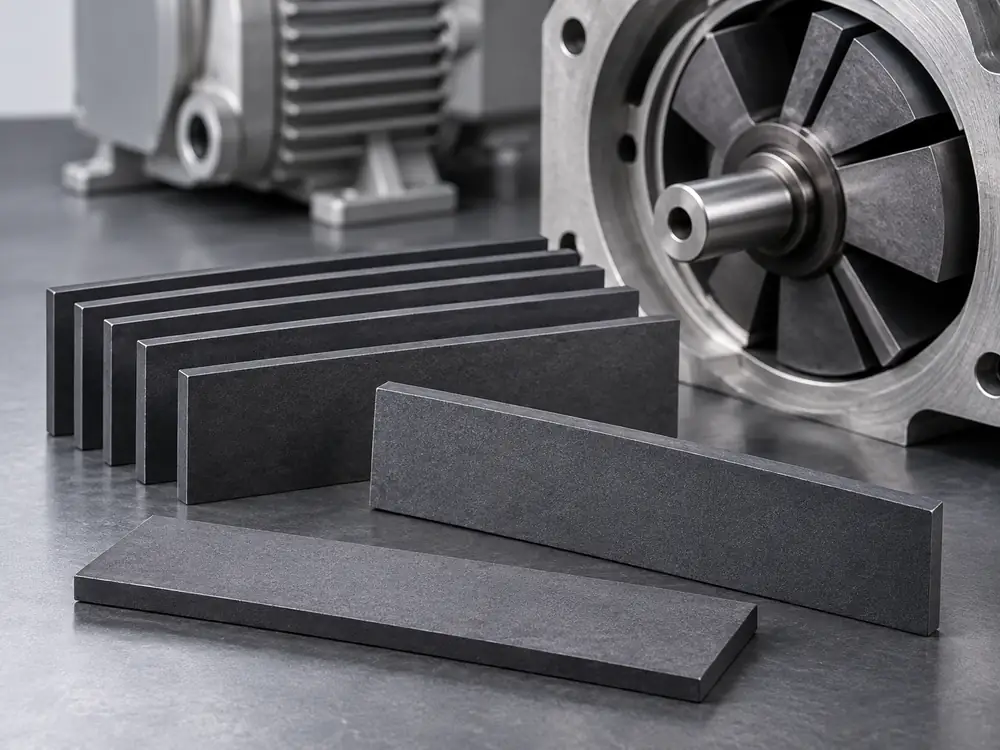
Carbon vanes for high-vacuum dry rotary vane pump applications

Orion KHA / KHH / KHF High-Vacuum Dry Pump Carbon Vanes

KHA · KHH · KHF High-Vacuum Models

Carbon vanes evaluated for selected Orion high-vacuum dry pumps. Higher compression ratios and operation near the pump’s ultimate pressure create different thermal, condensation and wear considerations from standard dry-pump duty.

Selection cue: Confirm the complete KHA, KHH or KHF model, vane dimensions, set quantity, operating pressure, temperature, humidity, inlet conditions and continuous or intermittent operation.

Custom carbon vane manufactured from a legacy pump drawing or sample

Legacy Orion KRX / KRS / KRA / KH Series Carbon Vanes

KRX · KRS · KRA · KH · KHB · KRH and Related Legacy Models

Drawing- or sample-based carbon vane replacements for selected legacy Orion dry pumps and blowers. This route is intended for models whose original components are discontinued, difficult to identify or different from current product revisions.

Selection cue: Provide the full legacy model, original part number when available, V/B designation, physical sample, photographs, number of vanes and measurements taken at multiple points.

Carbon vane set for a combined vacuum and pressure dry pump system

Orion CBF / CBX / CBXP Combination Dry Pump Vane Sets

CBF · CBX · CBXP Combination and Package Models

Carbon vane sets for selected combination dry pumps that provide vacuum and pressure. A combination unit may contain more than one internal pump section, so the package model alone may not identify every required vane.

Selection cue: Confirm the complete package model, internal pump-unit models, vacuum and pressure sides, vane quantity for each section, dimensions and operating conditions.

Final suitability is subject to verification of the exact pump revision, internal unit arrangement, original vane construction and operating conditions.

Orion model identification flowchart and vane dimension technical drawing

Where Orion Vane Matching Commonly Goes Wrong

The package model may not identify the internal vane

Combination CBF, CBX and CBXP equipment can contain multiple pump sections. Ordering from the package name without identifying each internal unit can produce the wrong vane or incomplete set. CARBOLVE reviews the complete package model, internal pump-unit references and vane quantity for each vacuum or pressure section.

Similar K-series names can use different vane configurations

KRF, KRX, KRS, KRA, KHA and KHF references do not describe the same pump construction. Model suffixes and revisions may also affect the required component. The nameplate, original part reference, dimensions and edge details should be considered together rather than matched from a shortened family name.

A worn sample may no longer show its original dimensions

A vane can become shorter, thinner or unevenly worn during operation. Copying one worn measurement may reproduce the wear instead of the intended fit. Where possible, combine the sample with the pump model, original part number, multiple measurements and photographs of the contact edge, chamfers and slots.

Operating conditions can accelerate wear

Contamination, restricted cooling, unsuitable moisture, rotor-slot deposits, incorrect geometry or the wrong material direction can contribute to abnormal wear. CARBOLVE reviews speed, temperature, humidity, vacuum or pressure, gas or medium and duty cycle together with the vane geometry.

Choose by Pump Family and Operating Role

Product direction Series references Operating distinction Main information to verify
KRF carbon vanes Compact, standard and heavy-duty KRF models Oil-free dry-pump vacuum or pressure duty Complete model and suffix, V/B configuration, set quantity, dimensions, speed, vacuum or pressure and duty cycle
High-vacuum carbon vanes KHA, KHH and KHF models Higher-compression dry-pump operation Exact model, operating pressure, temperature, humidity, inlet conditions, dimensions and set quantity
Legacy carbon vanes KRX, KRS, KRA, KH, KHB, KRH and related models Obsolete or difficult-to-identify equipment Old part number, nameplate, sample condition, V/B designation, geometry and original set quantity
Combination-pump vane sets CBF, CBX and CBXP models Vacuum and pressure sections within one unit or package Package model, internal pump units, side designation, vane quantity for each section, dimensions and operating conditions

Note: The same carbon vane reference may appear across more than one pump model, while visually similar models may require different parts. Verify the complete identification package before production.

Carbon vane material texture and geometry diagram without specific numerical values

Carbon Vane Material and Geometry

Application-Matched Carbon Graphite

Selected oil-free and dry-running rotary vane pumps use carbon graphite because an application-matched grade can provide low friction, self-lubricating behavior, controlled wear and dimensional stability without oil inside the compression chamber. The grade direction must still be reviewed against speed, temperature, humidity, pressure, inlet medium, mating surfaces and duty cycle.

Model-Matched Geometry

Available custom machining includes thickness, width, length, chamfers, slots, edge features and grade direction. These details affect how the vane moves inside the rotor slot and contacts the pump cylinder. A replacement should match the verified drawing or original component specification rather than only the overall length and width.

Material Substitution Boundary

Resin-impregnated carbon, carbon-fiber composite and glass-fiber composite are available CARBOLVE manufacturing directions for suitable vane projects, but they are not presented as standard substitutes for Orion carbon vanes. Use another material only when the original construction, drawing or application review supports it.

How to Identify an Orion Replacement Vane

A complete identification package helps distinguish vanes that share a similar outline but differ in material, thickness, edge features or set configuration.

  1. Record the complete pump or package model and every nameplate suffix.
  2. Identify the internal pump-unit model when the equipment is a combination package.
  3. Include the original part number or vane-set reference when available.
  4. Record the V/B or other side designation shown on the equipment documentation.
  5. Measure thickness, width and length at several points.
  6. Photograph and measure chamfers, slots, radii and contact-edge details.
  7. Show the orientation of asymmetrical features relative to rotation when applicable.
  8. Confirm the number of vanes required for each pump section.
  9. Record speed, temperature, humidity, vacuum or pressure, gas or medium and duty cycle.
  10. State the required order quantity, destination country and packing or identification requirements.

Caution: A used vane may be below its original dimensions. Use an original drawing or specification when available. Otherwise, review the sample together with the complete pump model and visible wear pattern.

Orion replacement vane measurement diagram showing thickness, width, length and edge details

Factors That Can Contribute to Premature Vane Wear

Observed condition Possible contributing factors Inspection direction
Heavy dust or scoring Inlet contamination, unsuitable filtration, abrasive particles or damaged contact surfaces Check the inlet system, cylinder, rotor slots and vane surfaces according to the pump manual
Uneven wear or sticking Rotor-slot deposits, distorted vane geometry, insufficient clearance or contamination Inspect slot cleanliness, vane straightness, thickness and edge features
Chipping or cracked edges Installation damage, incorrect orientation, excessive impact, unsuitable material or abnormal pump condition Review the complete vane set, edge geometry, rotor and cylinder before installing replacements
Discoloration or abnormal temperature Restricted cooling, ventilation problems, excessive back pressure or unsuitable operating duty Check cooling paths, installation environment and operating pressure
Corrosion or moisture-related deposits Condensation or unsuitable inlet moisture in a dry-pump application Follow the applicable pump guidance for inlet conditions, shutdown and moisture control
Rapid loss of vacuum or pressure Excessive vane wear, leakage, filters, seals, bearings or another pump-system issue Inspect the complete pump rather than diagnosing the vanes from output alone

Note: This table provides general inspection guidance. Model-specific limits, service intervals and procedures must come from the applicable Orion operating manual.

From Model Identification to Finished Carbon Vanes

Model-, Drawing- and Sample-Based Review

Replacement projects can be evaluated from equipment models, technical drawings, physical samples, photographs and operating conditions. This helps separate similar-looking components before a manufacturing specification is established.

Custom Vane Geometry

CARBOLVE can machine custom thickness, width, length, chamfers, slots, contact features and grade direction based on the verified project requirements.

Current and Obsolete Equipment Support

The same review route can support selected current models, discontinued components, maintenance replacements and repeat-order programs.

Agreed Inspection Points

The production workflow can include incoming material review, in-process checks, surface inspection and final verification of agreed dimensions, appearance, quantity, identification and packing.

Replacement Programs Supported by the Product Range

1

Planned Maintenance

Model-matched vanes can be evaluated for planned inspection and replacement programs. Replacement timing should follow the applicable manual, model-specific wear limit and actual duty cycle.

2

Distributor and Repeat Orders

Repeat orders benefit from one controlled specification for each pump model, vane material, dimensions, number per set and identification requirement. Similar-looking vanes should not be merged under one item without verifying interchangeability.

3

Legacy Equipment

When the original component is no longer readily available, a drawing or physical sample can provide a starting point for review. A worn sample is treated as a reference rather than automatically as the original dimensional standard.

4

Combination Pump Packages

For CBF, CBX and CBXP equipment, maintain a component record for every internal pump section. The package may require separate vacuum-side and pressure-side identification.

Manufacturing and Inspection for Custom Vane Projects

CARBOLVE manufactures industrial carbon and graphite components for equipment manufacturers, distributors and maintenance companies. Production is evaluated from drawings, physical samples, equipment models, dimensions, material requirements and operating conditions.

Relevant capabilities include grinding, drilling, slotting, surface finishing and drawing-based machining of custom geometries. Incoming material review, in-process checks, surface inspection and final verification are followed by protective packing and international delivery coordination.

  • Technical review before material and dimension confirmation
  • Drawing, sample and equipment-model evaluation
  • Sample or prototype stage when required by the project
  • Inspection of agreed dimensions, surface and edge condition
  • Identification, protective packing and export communication
CARBOLVE machining equipment for carbon and graphite components Inspection of machined carbon vane components Carbon vane components prepared for protective packing

Are CARBOLVE vanes genuine Orion parts?

No. CARBOLVE supplies independently manufactured compatible replacement and custom vanes. They are not genuine Orion parts, and CARBOLVE is not affiliated with or endorsed by Orion. Model names and part numbers are used only to identify the intended pump and vane configuration.

What is the difference between genuine and aftermarket Orion vanes?

A genuine vane is supplied under the equipment manufacturer’s own parts system. An aftermarket vane is independently manufactured for a stated compatibility requirement.

The meaningful comparison is not the label alone. Check the dimensional basis, carbon material direction, edge geometry, number of vanes per set, inspection criteria and the supplier’s compatibility-review process.

How can I confirm compatibility with an Orion pump?

Start with the complete model, suffix and original vane reference. For combination equipment, identify every internal pump unit instead of relying only on the package model.

Add the set quantity, complete dimensions, photographs of edge features, V/B designation and actual vacuum or pressure conditions. Compatibility must cover material, geometry and operating duty.

What causes premature carbon vane wear?

Common contributors include inlet contamination, restricted cooling, excessive temperature, unsuitable moisture, dirty rotor slots, damaged cylinder surfaces, incorrect vane geometry, improper installation or a material that does not match the application.

A worn vane should be inspected together with the rotor, cylinder, filters, cooling and operating history. Replacing the vane without addressing the underlying pump condition can lead to repeated damage.

How often should Orion pump vanes be inspected?

There is no universal inspection interval for every Orion model. Follow the applicable operating manual and model-specific wear limits, then consider the actual operating hours, duty cycle, inlet cleanliness, temperature and previous wear observations.

Recording dimensions and wear patterns during service creates a more useful maintenance history than relying on calendar time alone.

What are common symptoms of failing vanes in a high-vacuum dry pump?

Possible symptoms include reduced vacuum, longer evacuation time, unstable output, abnormal noise, increased temperature, carbon dust or difficulty reaching the expected operating pressure.

These symptoms can also be caused by filters, leakage, bearings, seals, condensation or other pump conditions. Inspect the complete system before concluding that the vanes alone are responsible.

What should be checked before installing replacement vanes?

Isolate the equipment from electrical power, vacuum and pressure. Confirm the correct model, material, set quantity, dimensions and orientation before opening the pump.

Inspect and clean the rotor slots only by methods permitted in the applicable manual. Do not force a vane into a slot, mix unidentified vane constructions or assume that the vacuum and pressure sides of a combination unit use the same configuration. Installation should be completed by qualified personnel following the pump documentation.

How should I compare replacement-vane suppliers?

Ask the supplier to state whether the product is genuine or independently manufactured. Confirm the proposed material direction, model and revision coverage, dimensional basis, edge geometry, set definition and agreed inspection points.

A practical supplier review should cover:

  • Complete pump and internal unit identification
  • Original part-number or drawing basis
  • Carbon material direction
  • Dimensions and edge features
  • Number of vanes per set
  • Vacuum-side and pressure-side differentiation
  • Inspection, identification and packing requirements
  • Technical communication for resolving specification differences

CARBOLVE supports model-, drawing- and sample-based review before material and dimensions are confirmed for production.

Request an Orion Vane Match Review

Submit the complete pump or package model, vane dimensions and operating conditions for an initial manufacturing review. A drawing or clear sample photographs can help identify features that are not visible from the model name alone.

Preparation checklist:

  • Full Orion pump or package model and suffix
  • Internal pump-unit models for combination equipment
  • Original part number, if available
  • Vane thickness, width, length and number per set
  • Drawing or clear photographs of all surfaces and edge features
  • V/B or vacuum/pressure-side designation
  • Speed, temperature, humidity, vacuum or pressure and duty cycle
  • Required order quantity and destination country

Email: sales@carbolve.com

Phone: +86(513)-81100106

By submitting this form, you agree that CARBOLVE may use the information provided to evaluate and respond to your product inquiry.