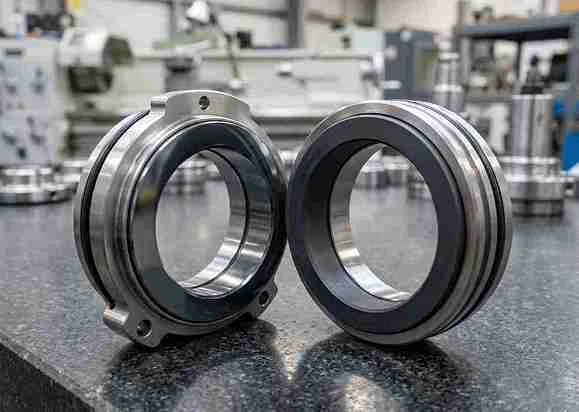
Graphite Plates Manufacturer
CARBOLVE supplies rigid industrial graphite plates in verified material grades, with support for custom dimensions, precision grinding, and drawing-based component machining.
A graphite plate is not completely specified by length, width, and thickness alone. Identical plate dimensions do not guarantee identical engineering performance. Material grade, forming method, and operating atmosphere must be verified.
- Verified extruded, molded, and isostatic graphite grades
- Custom L × W × T and cut-to-size plate blanks
- Precision CNC machining from engineering drawings
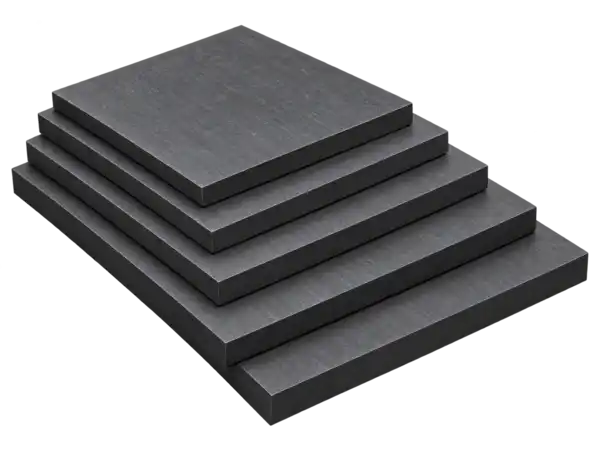
What Graphite Plate Do You Need?
Graphite Material Production vs Finished Plate Machining
Raw graphite production and finished graphite plate machining are different manufacturing capabilities. CARBOLVE supplies and machines industrial graphite plates in verified material grades.
Raw Graphite Production
Industry processes including coke preparation, mixing, forming (extrusion, isostatic pressing), baking, and graphitization.
CARBOLVE sources verified grades from qualified material manufacturers.
Plate & Blank Supply
CARBOLVE supplies qualified graphite material in stock plate formats, saw-cut blanks, and precision cut-to-size dimensions based on customer L × W × T requirements, accompanied by material data.
Finished Plate Machining
CARBOLVE performs secondary processing including surface grinding, CNC milling, drilling, grooving, and complex feature machining according to approved engineering drawings and tolerances.
Carbon & Graphite Focus
Material Grade Review
Custom Dimensions
Inspection Before Shipment
What Are Industrial Graphite Plates?
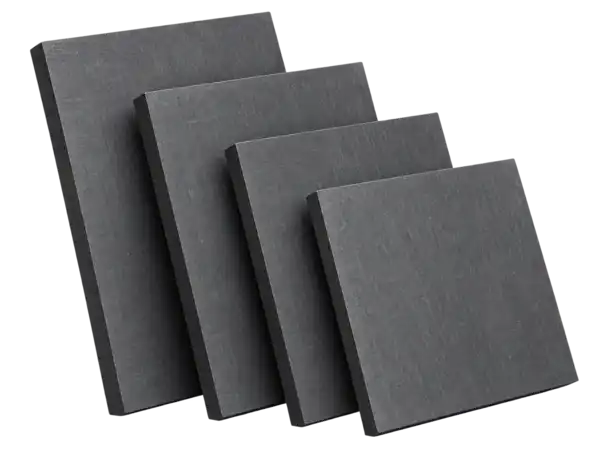
Industrial graphite plates are rigid flat graphite materials or components supplied in a specified graphite grade, length, width, and thickness. They may be used directly as industrial components, supplied as machining blanks, or further machined into parts requiring holes, channels, grooves, pockets, or other application-specific geometry.
GRAPHITE PLATE SPECIFICATION =
GRAPHITE GRADE + L × W × T + SURFACE / TOLERANCE + APPLICATION
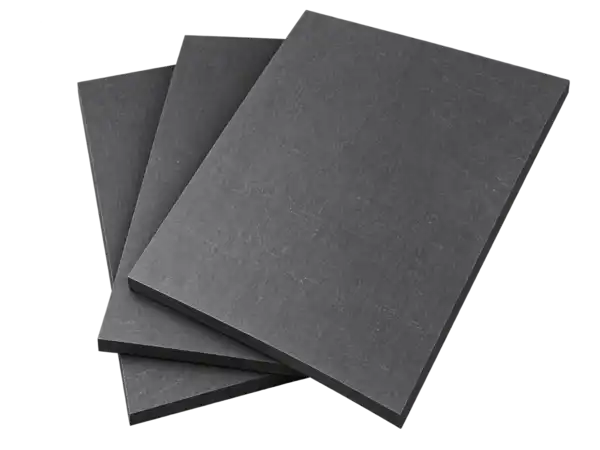
Terminology & Disambiguation
Rigid Plate vs Flexible Sheet
This page focuses on solid, rigid, machinable graphite stock. Flexible expanded-graphite material (often called graphite foil or gasket sheet) is compressible and used for sealing. They are not interchangeable products.
Graphite Plate vs Block
A block is usually thicker rectangular stock, while a plate has a lower thickness-to-width ratio. There is no single universal industry thickness boundary; specify exact L × W × T.
Graphite Plate vs Bipolar Plate
"Graphite plate" describes a material form. A "bipolar plate" is a functional electrochemical component requiring controlled permeability, flow channels, and sealing interfaces. Not every plate is fuel-cell suitable.
Graphite Plates by Material & Supply Condition
CARBOLVE supplies plates based on verified forming methods and required finishing levels.
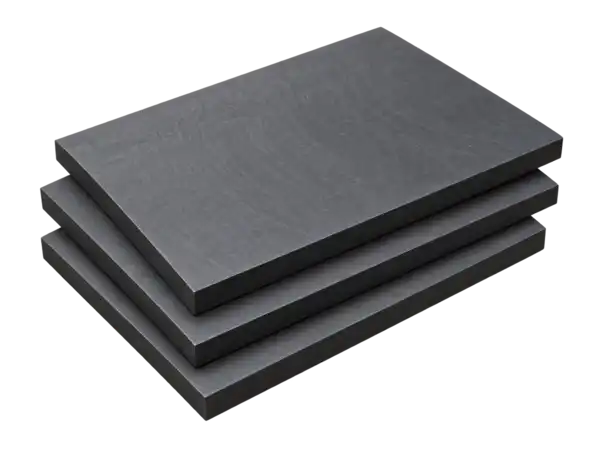
Cut-to-Size Plates
Saw-cut graphite blanks supplied to customer-specified length, width, and thickness with standard cutting allowances.
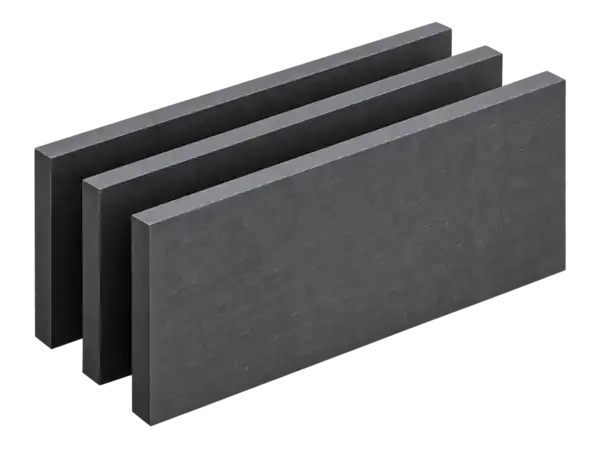
Precision-Ground Plates
Plates surface-ground to control thickness variation, flatness, and parallelism for precision fixtures or mating assemblies.
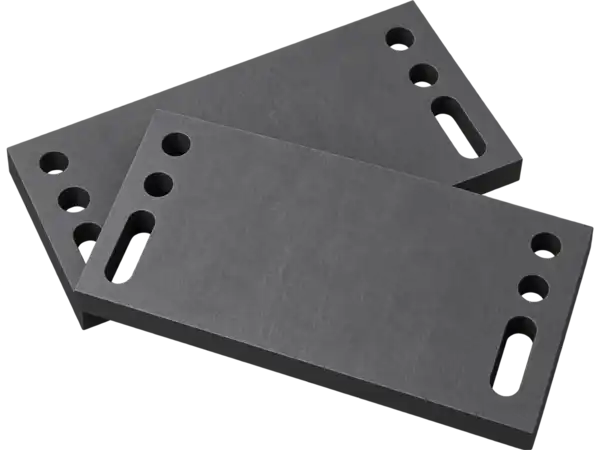
Custom Machined Plates
Finished components milled and drilled with holes, grooves, slots, or pockets according to approved engineering drawings.
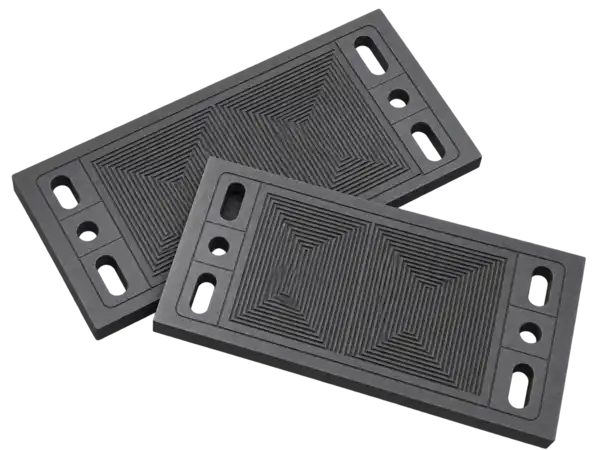
Isostatic & Fine-Grain
Plates sourced from isostatically pressed or fine-grain block materials for applications requiring fine feature machining.
Why Is Graphite Used for Industrial Plates?
Depending on the specific grade selected, suitable bulk graphite materials can provide combinations of the following properties. Note: Not every graphite grade possesses all characteristics equally.
Machinability
Easily machined into complex geometries compared to ceramics.
Electrical Conductivity
Grade-dependent resistivity for electrodes and electrolysis.
High-Temperature Use
Maintains strength at heat (atmosphere dependent).
Low Thermal Expansion
Grade-dependent CTE provides dimensional stability.
Graphite Plate Technical Specifications
| Parameter | Engineering Importance | CARBOLVE Data |
|---|---|---|
| Material Grade | Defines material identity | [Verified upon request] |
| Forming Method | Influences material structure | Extruded, Molded, Isostatic |
| Grain Size | Machining detail & structure | Grade dependent |
| Density / Porosity | Strength & permeability | Grade dependent |
| L × W × T | Plate geometry | Custom cut-to-size |
| Flatness / Parallelism | Precision interface | Per approved drawing |
How Graphite Plate Materials Are Classified
Graphite plates should be classified independently by forming method, grain structure, and purity. These categories describe different characteristics and should not be treated as interchangeable.
Extruded vs Isostatic Graphite
These terms describe the base material forming route, not just quality.
- Extruded Graphite Plates: Sourced from material formed via extrusion. May exhibit directional properties (anisotropy) regarding electrical resistivity and thermal conductivity relative to the extrusion direction.
- Isostatic Graphite Plates: Sourced from material formed via cold isostatic pressing (CIP). Typically offers a more uniform, fine-grain structure suitable for precision machining, though properties depend on the specific grade.
Grain Size & Purity
These are independent material properties.
- Fine-Grain Graphite: Influences fine machining detail, edge integrity, and surface quality. Fine grain is not automatically the "best" material for every application; large furnace plates may use medium grain.
- High-Purity Graphite: High purity refers to low ash/contaminant content, not density. It should be specified from verified analytical data for sensitive metallurgical or electrochemical applications.
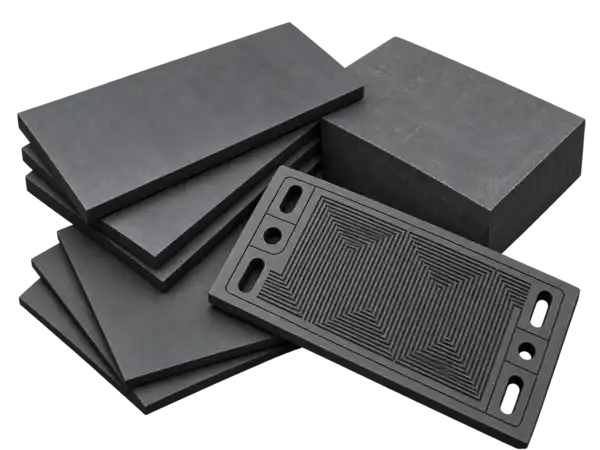
Custom Machined Graphite Plates From Drawings
CARBOLVE provides secondary CNC machining to convert rigid graphite plate stock into finished industrial components. Machining feasibility depends on graphite grade, grain structure, plate thickness, feature size, and tolerance requirements.
Design Considerations for Thin Plates
Graphite is highly machinable but relatively brittle compared to ductile metals. As plate thickness decreases, manufacturing risks increase. Unsupported span, remaining wall thickness near holes, clamping feasibility, and packaging must be reviewed before production.
Temperature, Atmosphere & Applications
A graphite plate operating-temperature specification is incomplete without the operating atmosphere.
In Air (Oxygen)
Graphite may oxidize in oxygen-containing environments at elevated temperatures. Exposure time, temperature, and grade affect oxidation rate.
In Vacuum
Suitable graphite grades can operate at significantly higher temperatures in vacuum furnaces, providing structural support and heating elements.
In Inert Gas
In atmospheres like Nitrogen or Argon, graphite plates resist oxidation and maintain high-temperature mechanical stability.
Industrial Applications
Furnace & Heat Treatment
Support plates, fixtures, and trays for vacuum and inert-gas furnaces. Requires review of thermal cycling, load, and atmosphere.
Electrical & Electrolysis
Electrode plates, anodes, and cathodes. Requires specification of required resistivity, current density, and process media.
EDM (Electrical Discharge Machining)
Graphite plate stock for EDM electrodes. Selection balances grain size, strength, machinability, and surface finish requirements.
Molds & Sintering Tooling
Plates used in hot-press tooling and sintering fixtures. Requires review of pressure, temperature, and reaction with processed material.
Metallurgy
Run-out plates and continuous casting components. Not every graphite grade is suitable for direct molten-metal contact.
Chemical Processing
Ordinary graphite plates are not automatically impervious. Chemical applications require verified impregnation and compatibility review.
OEM, Replacement & Custom Manufacturing Projects
Drawing-Based Manufacturing
- Receive and review drawing revision.
- Confirm graphite grade and forming method.
- Review L × W × T and material orientation.
- Review tolerances, flatness, and surface finish.
- Confirm machining feasibility (holes, channels).
- Establish inspection requirements and quote.
Existing Grade Replacement
Graphite grade codes are manufacturer-specific. Can another grade replace an existing plate?
Possibly, but an alternative graphite grade should be evaluated using verified material properties (density, grain, resistivity, strength), available plate size, and operating conditions rather than grade name alone. A physical sample defines geometry but does not automatically identify the exact graphite grade.
Common Graphite Plate Problems
Cracking / Chipping
Possible contributors: Mechanical impact, thin plate geometry, improper clamping, sharp corners, hole proximity to edge, thermal shock, or incorrect material grade.
Warping / Flatness Issues
Possible contributors: Original material condition, L/W/T ratio, machining sequence, handling, or lack of support during inspection.
Rapid Oxidation
Possible contributors: Elevated temperature combined with oxygen-containing atmosphere, exposure time, or unsuitable grade for the environment.
Wrong Electrical Resistance
Possible contributors: Incorrect material grade, wrong material orientation (anisotropy), unverified dimensions, or temperature effects.
Visual appearance alone does not establish the root cause. Send failure photos and operating data for review.
Graphite Plate Quality Control
CARBOLVE inspects cut and machined graphite plates according to agreed requirements. Inspection evidence and material documentation can be provided to verify compliance before shipment.
-
Material Verification Confirmation of grade, material data sheet, or certificate where applicable.
-
Dimensional Inspection Measurement of Length, Width, Thickness against approved tolerances.
-
Geometry & Surface Inspection of flatness, parallelism, machined features (holes, channels), and visual checks for edge damage.
-
Protective Packaging Export packaging designed to protect brittle edges and prevent flexural stress during transit.
Frequently Asked Questions
What is the difference between graphite plate and graphite sheet?
Does higher density mean better graphite?
What is the difference between isostatic and isotropic graphite?
Can competitor graphite grades be cross-referenced?
What is the maximum temperature of a graphite plate?
Are all graphite plates impervious?
Does CARBOLVE produce graphite raw material?
What Information Is Needed for a Quote?
Not every field is required for every project. Send all available information and CARBOLVE can identify additional data required during technical review.
1. Material Requirements
- Existing Grade or Manufacturer
- Forming Method (Extruded, Isostatic)
- Required Density / Purity
2. Dimensions & Precision
- Length × Width × Thickness
- Thickness Tolerance
- Flatness & Parallelism
3. Operating Conditions
- Application
- Temperature & Atmosphere
- Electrical / Chemical Media