Carbolve Logo
For CNC Vacuum Hold-Down Systems

CNC Router Vacuum Pump Vanes

CARBOLVE manufactures replacement and custom vanes for selected rotary vane pumps used in CNC vacuum hold-down systems. Choose dry-running carbon graphite or drawing-based options for oil-lubricated pumps, with material and geometry matched to the pump’s requirements.

  • Dry-running and oil-lubricated options
  • Drawing-based dimensions and edge profiles
  • Material selection for the operating conditions
Compare Vane Options

For rotary vane vacuum pumps used in workholding—not dust extraction equipment.

Carbon graphite vane with a machined edge profile

Choose Vanes for Your Pump’s Lubrication System

Start with the vacuum pump nameplate, not the CNC router brand. Similar-looking vanes can differ in material, thickness, edge profile and operating requirements.

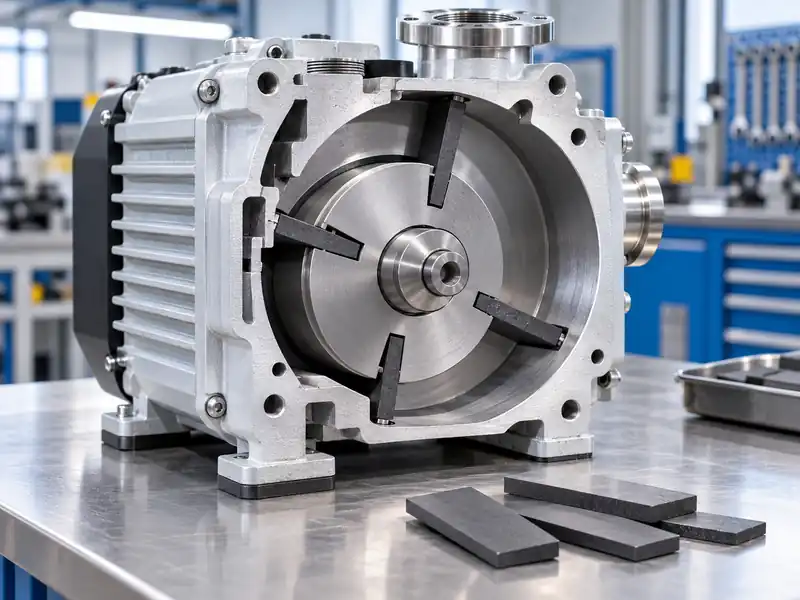
Dry-running carbon graphite vane

Dry-Running Vacuum Pump Vanes

Carbon graphite vanes for selected dry-running rotary vane pumps. The grade’s sliding behavior and the finished geometry work together in a pumping chamber designed to operate without lubricating oil. CARBOLVE supports replacement and custom dimensions, including length, height, thickness, chamfers and slots.

  • Match the full pump model and original vane geometry.
  • Consider temperature, humidity, speed and operating duty.
Explore Graphite Vanes
Rectangular vane sample with a layered surface

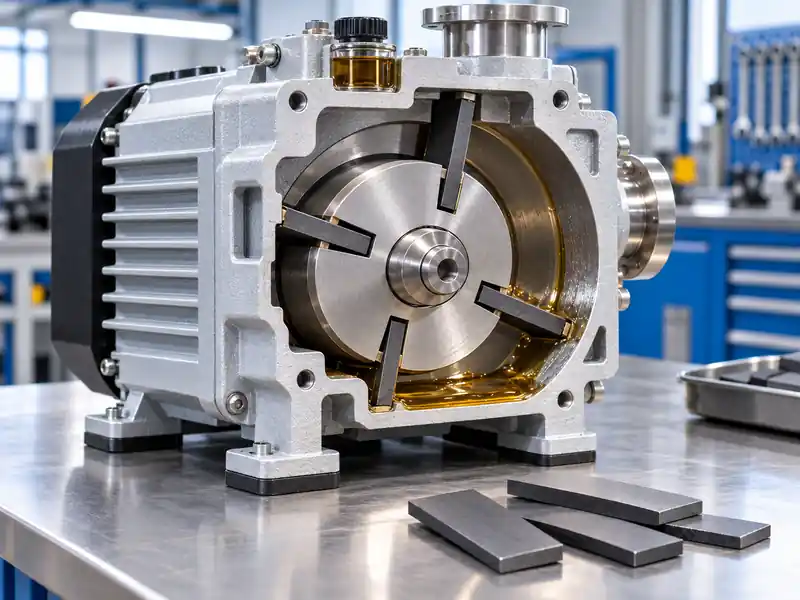
Oil-Lubricated Vacuum Pump Vanes

Made-to-drawing vane options for selected oil-lubricated rotary vane pumps. Carbon-fiber composite, glass-fiber and resin-impregnated carbon options are evaluated against the original construction, operating oil and service conditions. These materials are not interchangeable upgrades. The pump design determines which construction is appropriate.

  • Match the specified material construction and oil compatibility.
  • Check dimensions, edge geometry and the required vane count.

Representative vane configurations. Final geometry and material depend on the pump specification.

Weak Hold-Down Does Not Always Mean Worn Vanes

A CNC table needs both an effective vacuum supply and controlled leakage. Replacement vanes address the pump’s internal wear components; they do not correct an open vacuum zone, a leaking fixture or an unsuitable spoilboard.

Workpiece and vacuum table
Inlet filtration
Rotary vane vacuum pump

Air is drawn from the workholding system through inlet filtration. Dust extraction at the cutting tool is a separate function.

What you notice What it may indicate Practical response
Hold-down falls as more of the sheet is cut Exposed spoilboard, open zones or changing leakage Review table coverage and seals before attributing the loss to vanes.
Vacuum performance declines under comparable conditions Vane wear is one possible cause; leakage or restricted filtration may also contribute Inspect the system and pump according to the equipment manuals. Match replacement vanes to the verified pump specification.
New vanes bind or show abnormal edge wear Geometry, material or pump condition may be unsuitable CARBOLVE can machine to agreed dimensions and profiles; rotor and chamber damage require separate assessment.
A replacement looks right but its material is unknown Appearance alone does not establish compatibility Use the original material reference, drawing and lubrication requirements to guide selection.

Stop machining if workholding becomes unreliable. Follow the CNC machine manufacturer’s procedure before returning the system to production.

Select the Material for the Pump, Not by Appearance

There is no single longest-lasting vane material for every CNC vacuum pump. Material choice depends on lubrication, temperature, humidity, sliding conditions and the original pump design.

Material option Selection context Important distinction
Carbon graphite A principal option for dry-running rotary vane pumps designed for carbon vanes Grade selection must consider sliding behavior, mechanical requirements and operating conditions together.
Carbon-fiber composite Available for evaluation where the original vane specification calls for this construction Reinforcement and binder construction matter; it is not simply a stronger substitute for any graphite vane.
Glass-fiber material Available for selected drawing-based replacement requirements The specified construction and its interaction with the operating oil must be checked.
Resin-impregnated carbon Available where a treated carbon construction is required Resin treatment changes material behavior; suitability cannot be established from dimensions alone.

CARBOLVE Grade References

CVV-CG carbon graphite and CVV-FG fine-grain carbon graphite are starting points for dry-running grade discussions. CVV-RG identifies resin-treated carbon graphite directions for application review.

These references support preliminary selection. They are not universal pump approvals, OEM equivalents or guaranteed service limits. Carbon-fiber and glass-fiber constructions require their own material identification.

Match the Whole Vane Specification

A replacement must fit the rotor slot and follow the pump’s original geometry. Matching only the length—or ordering by router brand—leaves important differences unresolved.

Vane identification diagram showing length, radial height and thickness

L — Length

H — Radial height

T — Thickness

Edge profile

Slot or relief feature, where specified

Identification diagram only. Dimensions and tolerances follow the agreed drawing.

Identification point Why it matters
Full pump model and version A CNC router may use different vacuum pumps across builds or later retrofits.
Length, radial height and thickness These dimensions serve different fit and movement requirements. A worn sample may no longer show the original height.
Bevels, radii, chamfers and slots Small profile differences can affect seating, movement and contact.
Material and lubrication system Equal dimensions do not make dry-running and oil-lubricated vanes interchangeable.
Quantity per pump A single vane, a matched set and a service kit are different purchasing units.

Drawing-Based Manufacturing

CARBOLVE can manufacture custom vane dimensions, chamfers and slots from an agreed drawing. Samples and equipment references can support the review, but worn dimensions are not automatically copied as the new-part specification.

For repeat orders, an agreed material reference, drawing revision and packing quantity help keep the purchasing specification consistent.

Close up of carbon vane edge profile and thickness

Material and Geometry in One Manufacturing Review

A Choice Beyond One Material

CARBOLVE’s manufacturing scope includes carbon graphite, carbon-fiber composite, glass-fiber and resin-impregnated carbon vanes. This allows the discussion to start with the required construction rather than forcing every replacement into one material.

Custom Features Follow the Drawing

Length, height, thickness, chamfers and slots can be considered together. This is useful when a replacement requires more than a similar rectangular profile.

A Defined Basis for Repeat Supply

Material direction, dimensions, inspection requirements and packing details are agreed before production. The resulting specification gives maintenance teams and distributors a clearer basis for subsequent orders.

Manufacturing and Inspection at CARBOLVE

CARBOLVE manufactures carbon and graphite components in Nantong, China. Vane projects are reviewed against the component drawing, material requirements and operating conditions before production.

Machining to the Agreed Geometry

Manufacturing capabilities include grinding, drilling, slotting and surface finishing for drawing-based component geometries.

Checks Through Production

Incoming material review, in-process checks, surface inspection and final verification form part of the production workflow. The inspection scope follows the agreed component requirements.

Identification and Protective Packing

Final checks include appearance, quantity, identification and packing requirements. Protective packing and export coordination support delivery of the agreed components.

Carbon components held in a machining fixture

Carbon component machining

Packed cartons secured on a pallet

Protective packing for shipment

CNC Vacuum Pump Vane Buying and Maintenance Guide

Does every CNC vacuum pump use replaceable vanes?

No. Rotary vane pumps use sliding vanes inside the pumping chamber. Claw pumps, screw pumps, liquid-ring pumps and regenerative blowers use different mechanisms.

Even an oil-free vacuum source is not necessarily a carbon-vane pump. Identify the pump technology before selecting parts.

Vacuum source Uses the sliding vanes covered here?
Dry-running rotary vane pump Yes, with model-specific material and geometry
Oil-lubricated rotary vane pump Yes, with model-specific material and geometry
Claw, screw or liquid-ring pump; regenerative blower No

How do vanes contribute to vacuum hold-down?

Vanes slide within an eccentric rotor and divide the pumping chamber into changing volumes. Air enters, is trapped and is discharged as the rotor turns.

Their condition affects pumping performance, but holding a workpiece also depends on table sealing, available flow and the machining setup.

How often should CNC vacuum pump vanes be replaced?

Use the pump manufacturer’s inspection schedule and wear limits. There is no reliable replacement interval for every CNC installation.

Operating hours, contamination and temperature influence wear. Keep inspection records, and do not wait for broken vanes or unreliable workholding before investigating deteriorating performance.

What helps reduce premature vane wear?

Maintain inlet filtration and cooling according to the pump manual. Keep machining debris out of the pump and investigate abnormal heat or noise promptly.

For oil-lubricated pumps, use the specified oil and maintenance procedure. Do not add oil to a pumping chamber designed for dry-running operation as an improvised remedy.

Can maintenance staff install replacement vanes themselves?

The pump manual determines who should perform the work. Some designs require specialist service.

Before maintenance, isolate the equipment, prevent automatic restart, release stored pressure or vacuum, and allow hot parts to cool. Vane orientation, cleaning, clearances and fastener torque are model-specific. Recommission and verify workholding before machining resumes.

How should I compare replacement vane suppliers?

Compare the complete specification rather than the lowest advertised price:

  • Full pump identification and the proposed material construction
  • Finished dimensions and edge details
  • Pieces per set and what the quoted package includes
  • Inspection scope and identification
  • Delivery destination and agreed shipping arrangements

CARBOLVE offers drawing-based manufacturing and review of replacement requirements from China. A quotation is based on the component specification, quantity and delivery requirements; it should not be interpreted as local stock availability.

OEM branding and third-party manufacturing are different supply relationships. CARBOLVE replacement parts are not presented as genuine pump-brand parts or as universally interchangeable alternatives.

Request Vanes for Your CNC Vacuum Pump

Start with the pump’s full model and a drawing, part reference or sample details. Include the lubrication type, required quantity and any known material marking so we can review the replacement requirement.

Drawings and sample photographs can also be emailed directly to:
sales@carbolve.com