
Carbon & Graphite Technical Resources
Find application guidance, material grade information and product-specific compliance documents for CARBOLVE carbon brushes, carbon vanes, carbon seals and machined graphite components.
Use the resource path that matches your current question—where the component is used, how a material family should be evaluated, or which document applies to a specific product and market.
Choose the Resource That Matches Your Question
Each resource has a different purpose. Start with the question you need to answer, then continue to the relevant product page or contact CARBOLVE when application-specific confirmation is required.

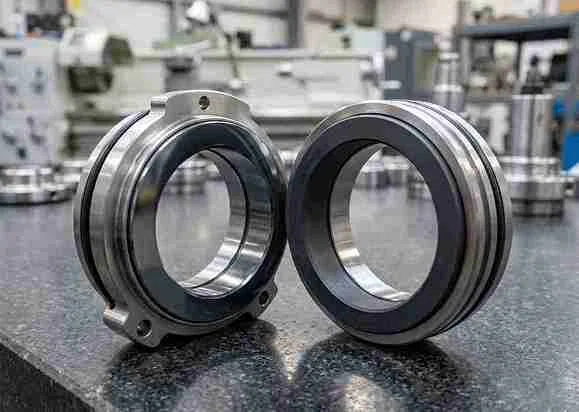
Carbon Applications
See where carbon brushes, carbon vanes, carbon seals and machined graphite parts are used, what function each product performs and which operating conditions affect the initial product direction.
Use this resource when you know the equipment or application but are not yet certain which carbon or graphite component family to evaluate.
Explore Carbon Applications
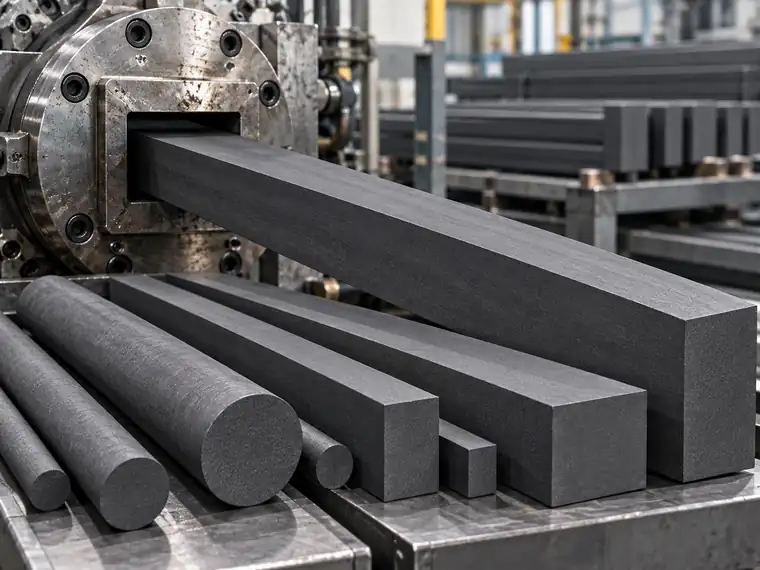
Carbon & Graphite Material Grades
Compare the selection logic for CARBOLVE carbon brush, carbon seal, carbon vane and industrial graphite material systems. Review which properties matter for each component instead of choosing by grade code alone.
Use this resource when you need to understand material families, property fields, grade-code logic or the information required for a material review.
Compare Material Grade Systems
Certifications & Compliance
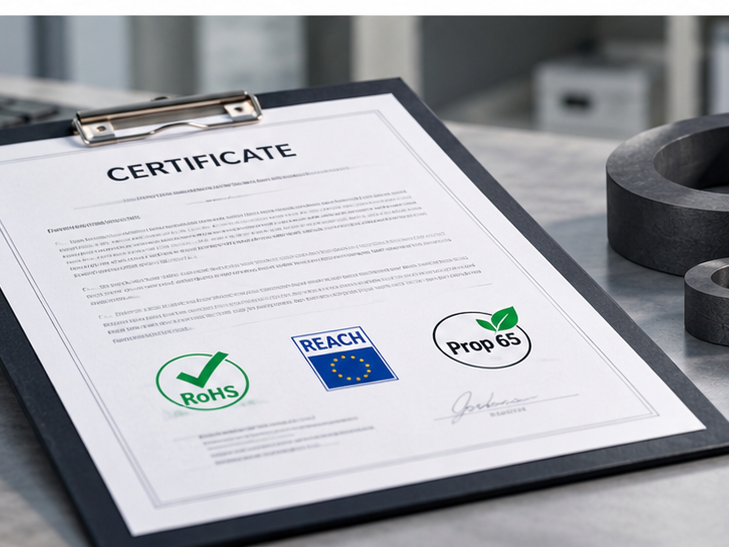
Review the currently available material safety and regulatory documents, including their product, model, issuing organization, date and stated scope.
The listed REACH, RoHS and California Proposition 65 documents currently identify CARBOLVE Carbon Brush models Carbolve-252 and Carbolve-214. Document applicability must be checked against the exact product and destination-market requirement.
Review Compliance DocumentsFind the Right Starting Point
A product application, material grade and compliance document answer different questions. Use the table below to avoid searching for one answer in the wrong resource.
Swipe horizontally to view the complete resource guide.
| Your Question | Start With | What You Will Find | Continue To |
|---|---|---|---|
| Where is this component used, and which product family fits the function? | Carbon Applications | Product functions, typical equipment, application paths and operating-condition inputs | The relevant carbon brush, vane, seal or graphite product page |
| Which material family or grade system should be compared? | Carbon & Graphite Material Grades | Component-specific grade systems, material families, comparison fields and selection cautions | A product-specific material review |
| Does a document apply to this product, model and destination market? | Certifications & Compliance | Document type, product and model scope, report or certificate number, date and issuing organization | A compliance discussion for the exact product |
| I already know the product and need manufacturing information or a quotation | Product Category | Product range, configuration, drawings, samples, customization and inquiry requirements | The matching product page or inquiry form |
These resources support preliminary evaluation. Final product, material and document decisions should be connected to the exact component, operating conditions and purchasing requirement.
Use the Right Resource Before Making a Product Decision
The Product Is Known, but the Application Fit Is Unclear
A carbon brush, vane, seal or graphite part may appear in several types of equipment. The product name alone does not define the required material, geometry or operating conditions.
Resource path: Carbon Applications connects the component function with typical equipment and the information that affects selection.
A Grade Code Looks Familiar, but Equivalence Is Not Established
Carbon and graphite grade codes are manufacturer-specific. Similar numbers do not establish equivalent material composition, treatment, properties or operating suitability.
Resource path: Carbon & Graphite Material Grades explains the four CARBOLVE grade systems and the comparison fields relevant to each component family.
A Compliance Document Exists, but Its Scope Is Uncertain
A certificate or test report may cover only a named product, model, sample or regulatory request. Its presence on a supplier website does not make it applicable to every component.
Resource path: Certifications & Compliance identifies the document type, product and model scope, report details and the information needed for further review.
Use Resources at the Right Stage of Evaluation

Define the Component Function
Begin with the equipment, product function and operating environment. Determine whether the requirement involves electrical current transfer, rotary vacuum generation, mechanical sealing, dry-running support or another machined graphite function.
Recommended resource: Carbon Applications
Compare the Relevant Material Direction
Move into the grade system that matches the component. Compare electrical properties for brushes, sealing and sliding conditions for seal materials, pump and environment conditions for vane materials, or structural, thermal and electrical properties for industrial graphite.
Recommended resource: Carbon & Graphite Material Grades
Check Document Scope
When compliance or material-safety documentation is required, match the document to the exact product, model, destination market and regulatory question. Do not use one document as a substitute for another.
Recommended resource: Certifications & Compliance
A technical resource helps organize the decision. Drawings, samples, equipment information and operating data may still be required before a component, material or document can be confirmed for a project.
Clearer Paths From Question to Product
Resource Content Organized by Decision
Applications, material grades and compliance documents are separated because they answer different purchasing and engineering questions. This keeps application guidance from being confused with material data or regulatory scope.
Product-Specific Context
The resource paths connect back to CARBOLVE carbon brushes, carbon vanes, carbon seals and machined graphite parts instead of presenting disconnected general information.
Visible Scope and Limitations
Material references distinguish preliminary selection from released specifications. Compliance content identifies the listed product and model scope. Application guidance separates component selection from complete equipment-system validation.
Crawlable Technical Information
Important resource summaries, comparison fields, document scope and internal links remain visible in the page content rather than being available only inside images or downloadable files.
Expandable Resource Structure
New technical support pages, FAQs and downloadable guides can be added to the same resource system after their content and files are ready, without changing the purpose of the existing resources.

Resources Connected to Real Product Decisions
CARBOLVE resources are organized around the information required to evaluate industrial carbon and graphite components: product function, operating conditions, material direction, geometry, documentation and product-specific scope.

Application Guidance
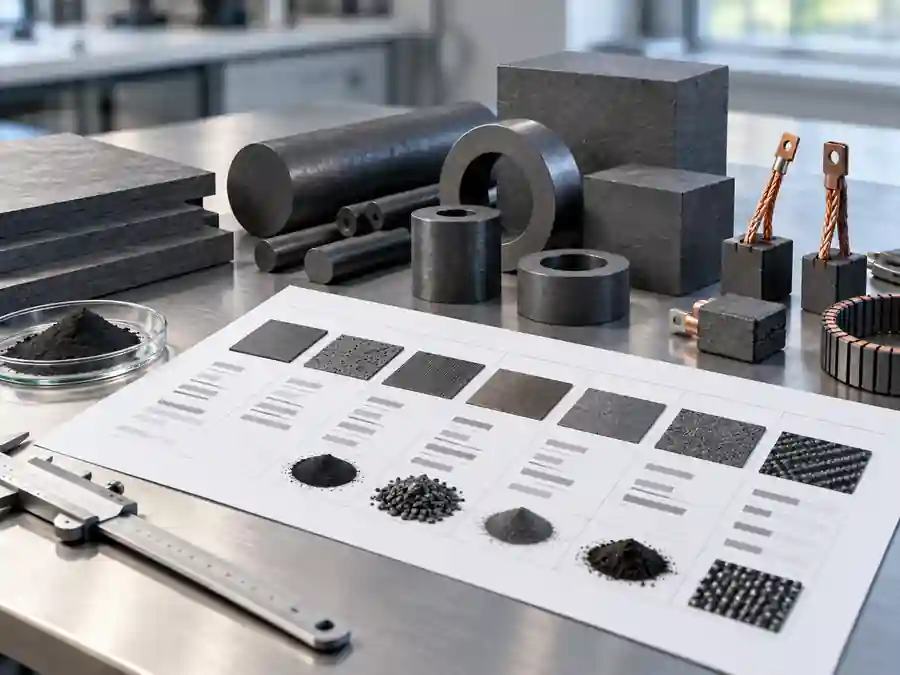
Application content connects the product family to its equipment function and the conditions that affect preliminary selection.
Material Selection Boundaries
Material content explains why brush, seal, vane and industrial graphite grades require different comparison fields and why a grade code alone is not a complete specification.

Document Scope
Compliance content identifies the product, model, report or certificate reference, date and issuing organization shown in the available files.

Related Product Paths
Each resource should lead to the relevant product family, technical page or inquiry route rather than ending as an isolated article.
Questions About Using CARBOLVE Resources
Where should I start if I do not know which product I need?
Start with Carbon Applications. Identify the function the component performs—such as electrical current transfer, vacuum generation, sealing, sliding support or a custom graphite function—then follow the relevant product path.
Can a material grade page confirm that two supplier grades are equivalent?
No. Grade codes are manufacturer-specific. A comparison should consider the base material, treatment, controlled properties, test method, component geometry and operating conditions. Similar names or numbers do not establish equivalence.
Do the listed compliance documents apply to every CARBOLVE product?
No. The currently listed REACH, RoHS and California Proposition 65 documents identify Carbon Brush models Carbolve-252 and Carbolve-214. Each document should be checked against the exact product, model, destination market and requirement.
What should I provide when I need a technical review beyond the resource page?
Provide the product or component function, equipment manufacturer and model, drawing or sample, dimensions, existing material or markings, operating conditions and required quantity. For a compliance question, also include the destination market and required document.
Will more resources be added to this page?
Additional technical support, FAQ and downloadable-guide categories can be added after their content or files are ready. New resources should follow the same structure: a clear question, an accurate scope, a useful answer and a descriptive route to the next step.
Continue to the Relevant Product Family
Need a Product, Material or Document Review?
If the available resources do not answer your project question, send the information currently available. CARBOLVE can use the product, equipment, drawing, sample, operating conditions or document requirement to identify the relevant next discussion.
For a more useful review, include the component function, equipment model, dimensions, existing material or part reference, operating environment and required quantity. For compliance questions, include the destination country or market and the document being requested.