Carbolve Logo
Graphite Furnace Parts Made to Drawing

Graphite Furnace Parts Made to Drawing

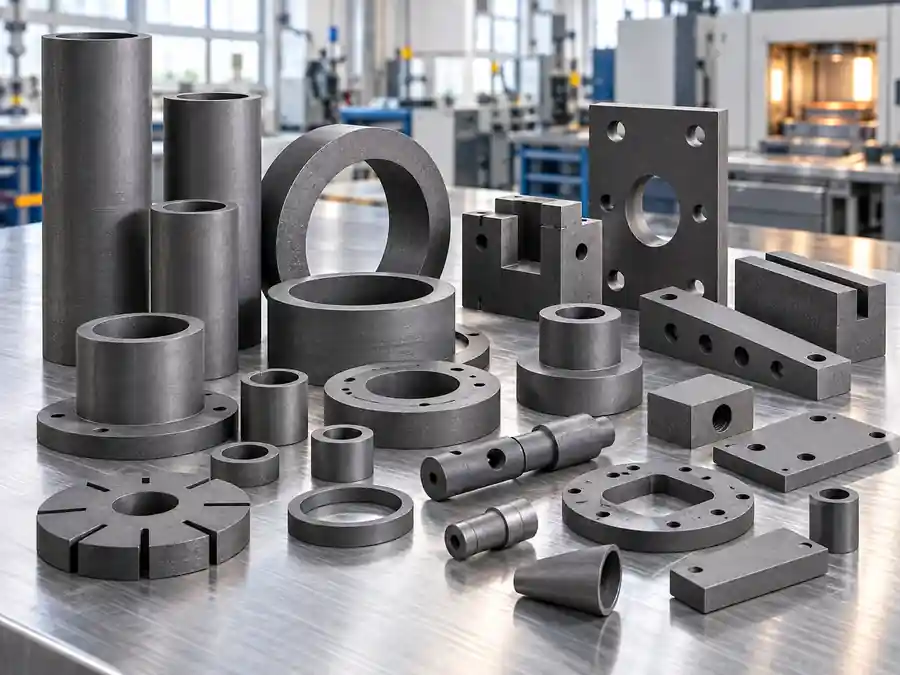
CARBOLVE manufactures graphite heating elements, furnace fixtures, crucibles and replacement components to customer drawings. We review geometry, material requirements and operating conditions for new-build assemblies and maintenance projects.

Drawing-Based Machining Material Review Agreed Inspection Requirements

Explore Furnace Parts

Graphite Components for Different Furnace Functions

Select the component by its function in the furnace. Each part is reviewed against its drawing, material requirements and working conditions rather than supplied as a universal replacement.

Schematic of Graphite Heating Elements
Geometry illustration; not a production drawing.

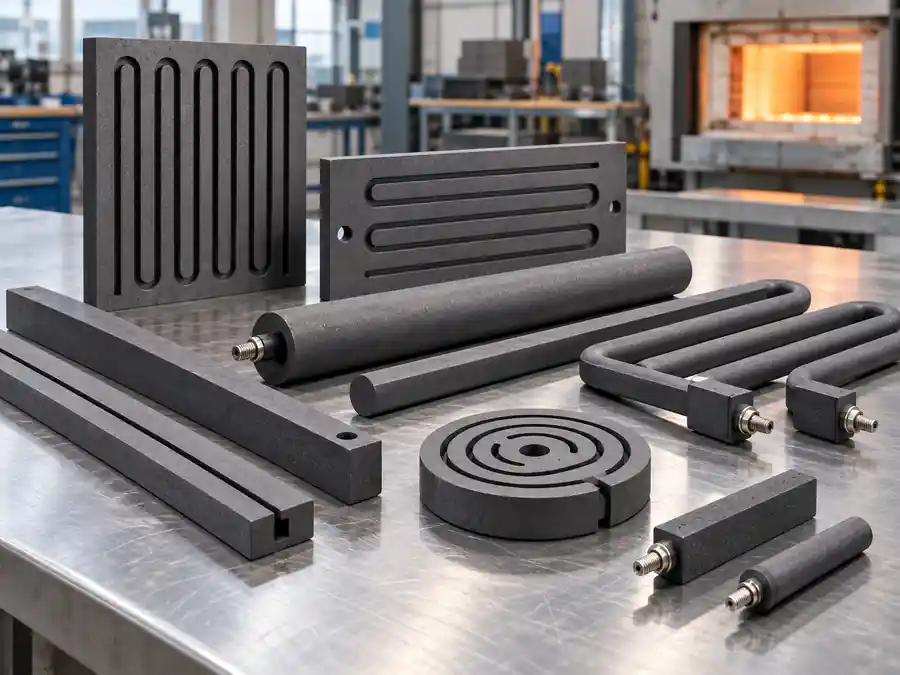
Graphite Heating Elements

Machined graphite components that generate heat through electrical resistance. The current path, section geometry and connection details need to suit the furnace’s electrical and mechanical design.

Selection Focus
  • Current-path geometry and connection dimensions
  • Material and electrical resistance requirements
View Graphite Heating Elements
Schematic of Graphite Furnace Fixtures & Supports
Geometry illustration; not a production drawing.

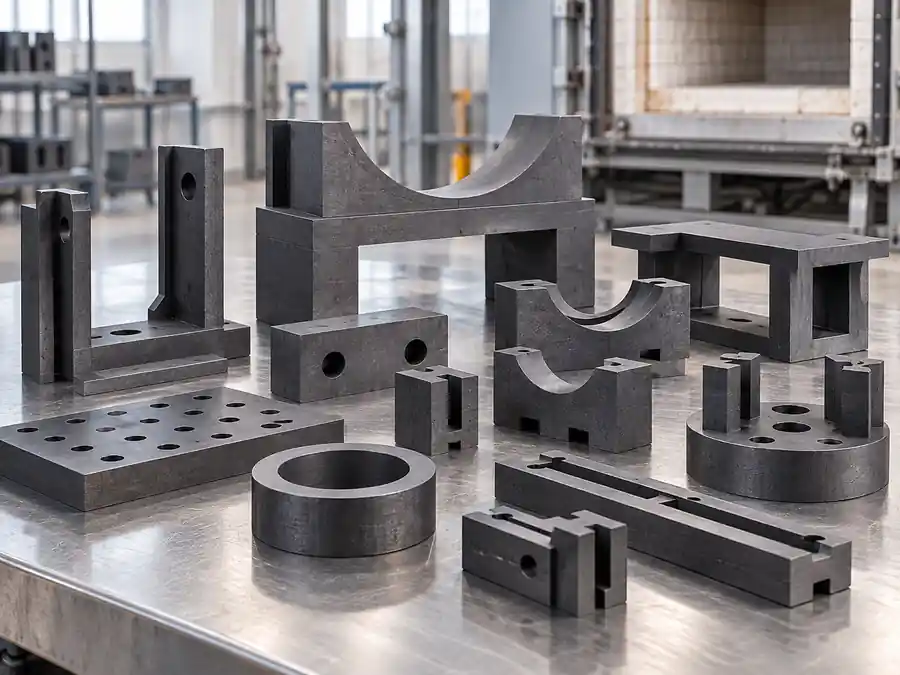
Graphite Furnace Fixtures & Supports

Drawing-based graphite parts for carrying, supporting and locating furnace loads. Bearing surfaces, support positions and assembly clearances are reviewed alongside the loading arrangement and thermal cycle.

Selection Focus
  • Load arrangement and support geometry
  • Mounting dimensions and thermal conditions
View Furnace Fixtures & Supports
Schematic of Graphite Crucibles
Geometry illustration; not a production drawing.

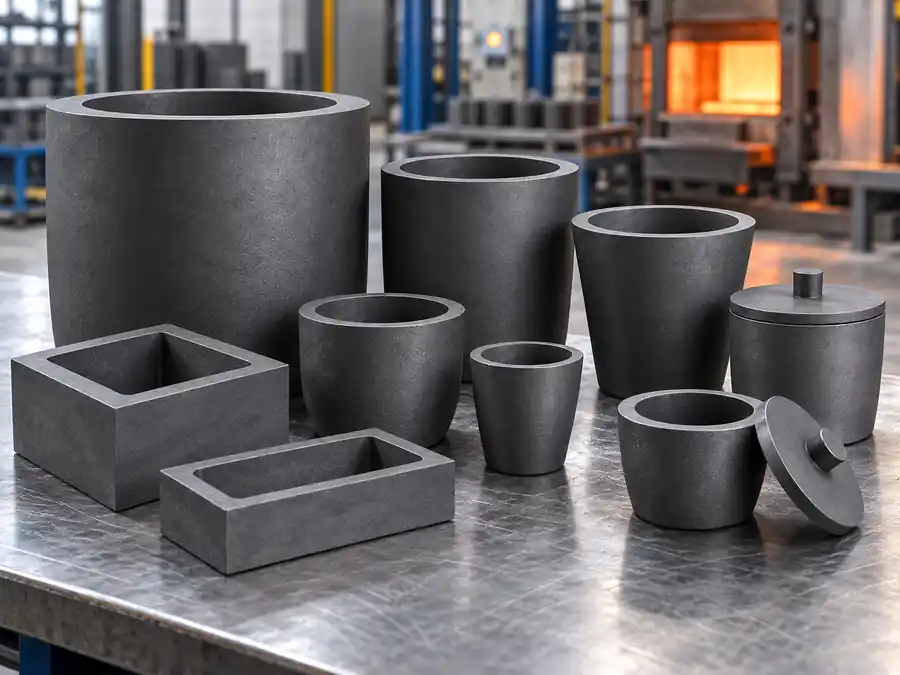
Graphite Crucibles

Machined graphite containers for process materials. Internal dimensions, wall sections and seating features are specified around the contents, handling method and furnace environment.

Selection Focus
  • Internal profile, wall thickness and seating
  • Process-material and atmosphere compatibility
View Graphite Crucibles
Schematic of Custom Graphite Furnace Replacement Parts
Geometry illustration; not a production drawing.

Custom Graphite Furnace Replacement Parts

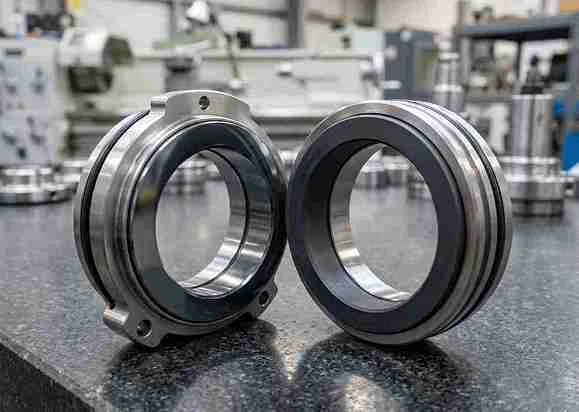
Tubes, rings, spacers, connection pieces and other drawing-defined components outside the categories above. Replacement evaluation focuses on nominal dimensions, mating features and material requirements—not appearance alone.

Selection Focus
  • Drawing revision and mating interfaces
  • Material identity and operating duty

Choose the Material Around the Component’s Duty

A furnace heater, a load-bearing fixture and a crucible do not place the same demands on graphite. Forming route, grain structure, electrical properties, loading and contamination limits all influence the material decision.

The CVG references below are starting points for technical discussion. They are not interchangeable grades or guaranteed operating ratings.

Material direction Preliminary CVG references Relevant part requirements Selection consideration
Isostatic graphite CVG-ISO20 / CVG-ISO30 Detailed machined components and heating-element designs Review geometry, mechanical requirements and electrical properties together.
Extruded graphite CVG-EX20 / CVG-EX30 / CVG-EX40 Plates, rods and larger-section furnace components Directional properties and the required blank size matter where loading or current flow is critical.
Molded graphite CVG-MD30 Crucibles, fixtures and machined thermal components Match the section geometry and process conditions to the material requirements.
Purity-focused material selection CVG-HP30 / CVG-HP40 Components for contamination-sensitive processes Define the relevant impurity limits and validation requirements; a grade name alone does not establish suitability.
Swipe left to view full table specifications.

Material Selection Is More Than Density

Higher density alone does not establish a better furnace component. A suitable material must also meet the part’s machining, electrical, mechanical and process requirements. Material acceptance limits and any additional validation needs are agreed for the individual order.

The Furnace Setpoint Is Not a Component Rating

Graphite can oxidize in oxygen-containing environments at elevated temperatures. Suitability therefore depends on atmosphere, exposure, thermal cycling and contact with process materials—not temperature alone. A rating established under vacuum or inert gas should not be assumed to apply in air.

A Matching Shape Is Only the Starting Point

A replacement part can resemble the original and still differ in fit or function. CARBOLVE reviews the component’s intended role alongside the drawing so the manufacturing scope addresses more than its outer dimensions.

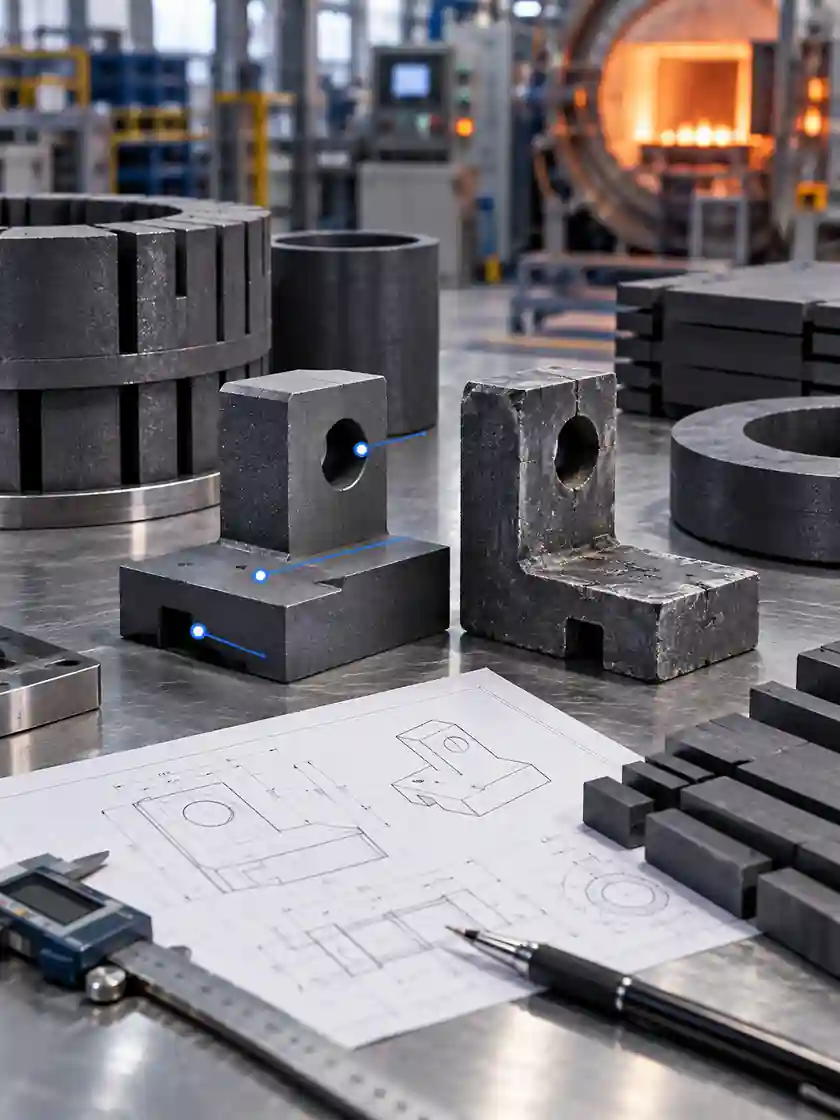
Schematic showing connection interface, contact surface, and support location
Connection interface
Contact surface
Support location
Illustrative review points; actual features depend on the component drawing.
Replacement issue Why it matters How we scope the part
A worn sample is the only reference Erosion or damage may obscure the original dimensions and contact surfaces. Review the sample alongside available drawings, equipment information and mating-part details before agreeing the geometry.
A heater keeps its shape but changes material Electrical resistance depends on both the material and the current-path geometry. Include material and electrical requirements in the technical review; establish any required verification separately.
A support fits the assembly but the load has changed Loading position and unsupported spans affect the stresses in the component. Review support geometry, mounting features and the stated loading arrangement.
A generic graphite grade is selected for a sensitive process Bulk material descriptions do not establish compatibility with the process or its contamination limits. Review atmosphere, material contact and impurity requirements before selecting a material direction.

Manufacturing Built Around Your Drawing

Geometry Defined by the Part

Dimensions, holes, slots, profiles and contact features are reviewed from the drawing. This supports furnace components that need a specific interface rather than a general-purpose catalog shape.

Material and Machining Reviewed Together

CARBOLVE considers material direction alongside geometry, operating conditions and surface requirements. This keeps the material discussion connected to the component being manufactured.

Support for New and Replacement Projects

Projects can begin with a new drawing or an existing component requiring evaluation. For repeat orders, the agreed drawing and material requirements provide the basis for discussing subsequent production.

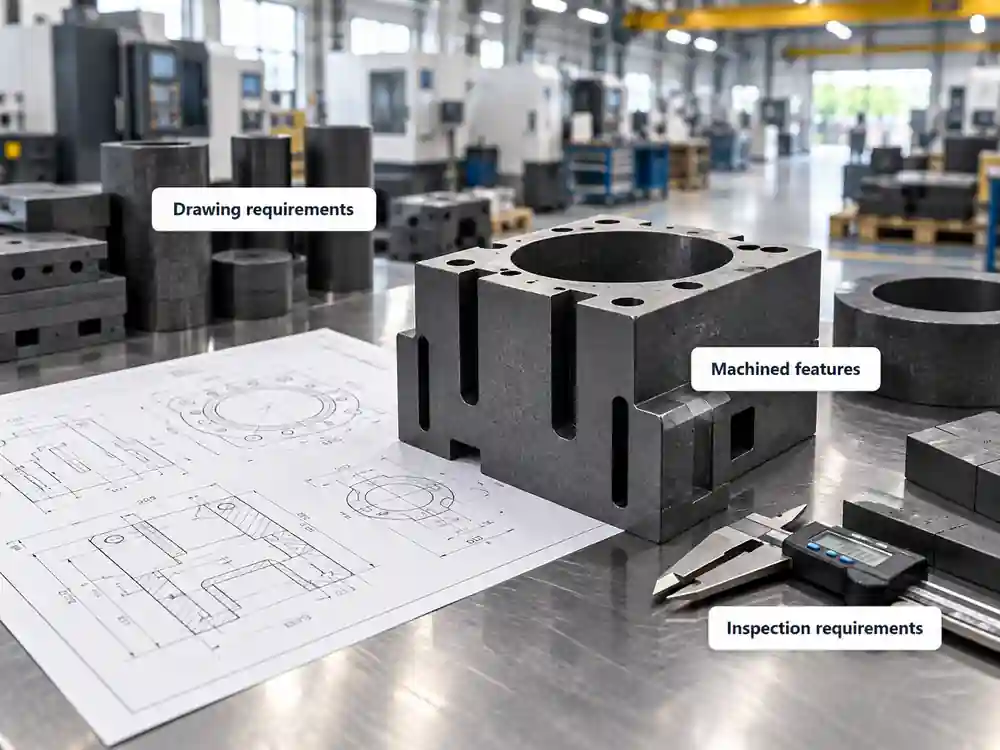
Schematic relating drawing requirements to machined features
Drawing requirements
Machined features
Inspection requirements

Inspection Before Shipment

CARBOLVE’s production review includes incoming material checks, in-process checks, surface inspection and final verification. Agreed dimensions, appearance, identification and packing requirements guide the inspection of each order.

1

Incoming Material Review

Material requirements are reviewed before machining.

2

In-Process Checks

Dimensions and machined features are checked during production against the agreed requirements.

3

Final Verification

Finished parts are reviewed for agreed dimensions, surface condition and visible damage.

4

Packing and Shipment Preparation

Protective packing, part identification and shipment details are coordinated for delivery.

Note: For application-specific electrical, impurity or other test requirements, the method and deliverables need to be agreed before the order is finalized.

Ordering and Replacement Questions

Can you manufacture a part when the original drawing is unavailable?

A physical sample, photographs and equipment information can support an initial review. However, a worn or broken component may not reveal its original geometry. Critical dimensions and mating features need to be established before production can be agreed.

For a replacement heater, geometry alone is not enough; material and electrical requirements also need to be addressed.

Are CARBOLVE replacement parts genuine furnace-OEM parts?

CARBOLVE supplies independently manufactured, drawing-based graphite components. They should not be described as original furnace-OEM parts or authorized replacements unless that status is separately documented.

An equipment name or model can help identify the application, but it does not establish dimensional or functional compatibility.

How should I compare quotations for custom graphite furnace parts?

Compare quotations against the same manufacturing scope:

  • Drawing revision, dimensions and quantity.
  • Material requirements and any required validation.
  • Surface condition and acceptance criteria.
  • Inspection and documentation deliverables.
  • Packing, destination and delivery terms.

A lower component price is not a like-for-like comparison if the material, inspection scope or included services differ. CARBOLVE reviews the project requirements before providing a drawing-based quotation.

What should be reviewed when a graphite furnace part fails early?

Visible cracking, erosion or damaged interfaces can justify further inspection, but they do not identify one universal cause. Material selection, mechanical restraint, loading, atmosphere and electrical connections may all be relevant, depending on the component.

Follow the furnace manufacturer’s maintenance procedures. Qualified personnel should isolate and cool the equipment before inspection; there is no single replacement interval suitable for every graphite furnace part.

Request a Quote for Your Graphite Furnace Part

Start with the component drawing and quantity. Include the material requirement or existing grade, furnace atmosphere, operating conditions and destination so we can review the manufacturing scope.

If you are working from a sample, describe the part’s function and any wear or damage that may affect its dimensions.

Related Graphite Products and Capabilities

Direct Contact

sales@carbolve.com

+86(513)-81100106