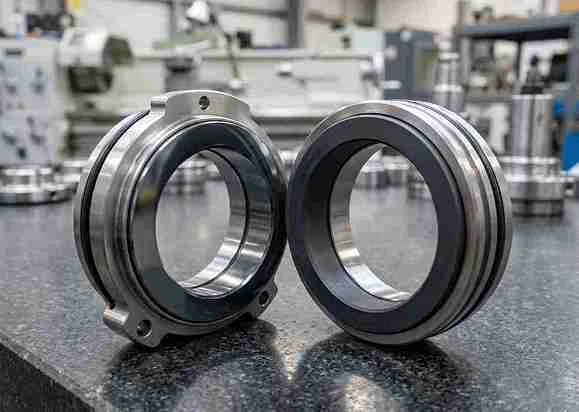
Graphite Vanes Manufacturer
CARBOLVE manufactures custom and replacement graphite vanes for applicable dry-running rotary vane vacuum pumps, oil-free vacuum pumps, dry rotary vane compressors, and combined vacuum-pressure equipment. We support drawing-based production, physical sample evaluation, and replacement identification for OEM projects and obsolete equipment.
Graphite vanes are commonly used in suitable dry-running rotary vane systems. Final material and dimensional compatibility must be confirmed for the specific pump or compressor.
- Custom Graphite Vane Manufacturing
- Dry-Running Pump Applications
- Drawing and Sample Production
- Precision-Machined Dimensions
Send the pump manufacturer/model, existing vane dimensions, material information, number of vanes per set, photographs, operating conditions, and quantity.

Carbon & Graphite
Products Manufacturer
Graphite Vane
Precision Machining
Product Scope: This page focuses on graphite sliding vanes used in applicable rotary vane vacuum pumps and compressors. It does not refer to turbine guide vanes, fan blades, impellers, or unrelated aerodynamic vanes.
Graphite Vanes for Different Rotary Vane Applications

Dry Vacuum Pump Graphite Vanes
For verified dry-running rotary vane vacuum pumps. Evaluated according to pump model, dimensions, vane quantity, RPM, vacuum level, and environment.

Graphite Compressor Vanes
For applicable oil-free rotary vane compressors. Evaluated according to compressor model, operating pressure, RPM, duty cycle, and process gas.

Combination Pump Graphite Vanes
Manufactured for applicable combined vacuum-pressure rotary vane pumps operating under specific mechanical and thermal loads.

Replacement Graphite Vane Sets
For existing pumps. Evaluated based on OEM part number, old vane sample, dimensions, and pump model verification.
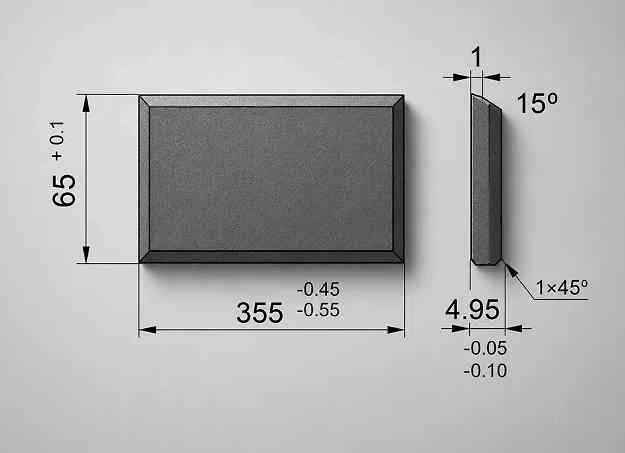
Custom Graphite Vanes
For non-standard dimensions, obsolete pumps, special edge geometry, and specific OEM development requirements.

Graphite Vane Sets
For pump models requiring several matched vanes. Always confirm the specific quantity required per rotor for your exact pump model.
What Are Graphite Vanes?
Graphite vanes are precision-machined sliding components used in applicable rotary vane vacuum pumps and compressors. The vanes move radially in slots within an eccentric rotor and maintain contact with the surrounding cylinder or stator surface, creating chambers whose volume changes as the rotor turns.
Depending on the verified material grade, graphite vanes may provide self-lubricating sliding behavior, a low-friction direction, dimensional stability, thermal behavior suitable for dry-running systems, and controlled wear. Avoid universal material claims without pump data.

Typical features: Length, Height/Width, Thickness, Sliding faces, Leading/Trailing edges, Chamfer/Radius.
How Do Graphite Vanes Work in a Rotary Vane Pump?
The vane simultaneously performs sliding, sealing, chamber separation, and wear compensation through outward movement. For dry-running pumps, suitable graphite materials can provide sliding behavior without an oil film.
- 1 An eccentrically mounted rotor turns inside the cylinder.
- 2 Graphite vanes move radially within rotor slots.
- 3 Centrifugal force and the pump design keep the vane tips in contact with the surrounding surface.
- 4 Adjacent vanes create separate chambers.
- 5 Chamber volume increases on the inlet side and decreases toward the outlet.
- 6 Gas is drawn in, trapped, compressed, and discharged.
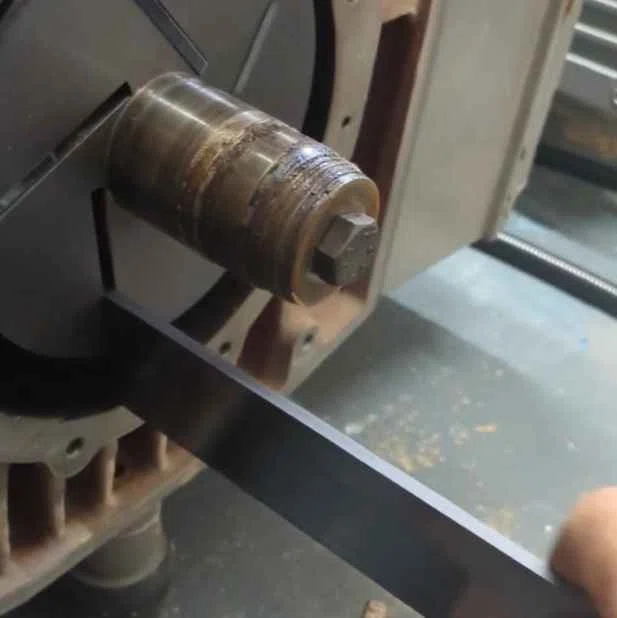
Graphite Vanes vs Carbon Vanes
"Carbon vanes" is a broader commercial and material-family term. "Graphite vanes" refers more specifically to vanes manufactured from an appropriate graphite-rich or graphite-category material.
Graphite vanes are one material direction within the broader carbon-vane category.
Depending on the material manufacturer, carbon vane materials may include carbon graphite, graphite, electrographite, resin-bonded carbon/graphite, carbon composite, and other specialized carbon materials. Do not treat these names as exact synonyms.
Graphite Vanes vs Graphite Carbon Brushes
Graphite vanes and graphite carbon brushes may both use carbon/graphite materials, but they perform completely different functions.
- Graphite Vane: A mechanical sliding/sealing component that operates inside a pump or compressor to form changing-volume chambers, experiencing mechanical sliding, pressure differential, heat, and wear.
- Graphite Carbon Brush: An electrical sliding contact that transfers electrical current, operating against a commutator or slip ring.
Dry-Running vs Oil-Lubricated Rotary Vane Pumps
Graphite vanes are commonly used in applicable dry-running rotary vane vacuum pumps and compressors. Vane material must always be verified against the pump model, operating principle, and original material specification.
Dry-Running Rotary Vane Pump
- No operating oil film in the compression chamber.
- Graphite/carbon-graphite is a common material direction.
- Dry sliding material characteristics are critical.
Oil-Lubricated Rotary Vane Pump
- Oil provides lubrication and sealing.
- Material varies by pump design (fiber, resin, composite).
- Graphite should not be assumed automatically.
Key Characteristics of Graphite Vane Materials
Understanding how material properties interact with pump operating conditions.
Self-Lubricating Behavior
Suitable graphite materials can support dry sliding without conventional oil lubrication. Not every graphite grade is equally self-lubricating.
Friction Behavior
Friction directly affects heat generation, vane wear, pump load, and the condition of the cylinder contact surface.
Dimensional Stability
Thermal expansion and dimensional stability must be evaluated in grade-dependent terms to ensure free movement in the rotor slot.
Mechanical Strength
Critical because vanes experience centrifugal loading, sliding contact, start/stop forces, pressure differentials, and vibration.
Thermal Behavior
Must withstand pump temperature, friction heat, process gas temperature, and rapid start/stop temperature changes.
Wear Behavior
Graphite vanes are intentionally designed as controlled wear components to protect the more expensive rotor and cylinder.
Chemical Compatibility
Highly grade and process dependent. Do not assume universal chemical resistance for all graphite materials.
Humidity Response
Material performance may vary with humidity, moisture, condensate, and the specific process gas being pumped.
How Are Graphite Vane Materials Generally Produced?
The exact route varies by material family, manufacturer, grade, binder, and treatment.
Note: This diagram explains general industry material processing. It should not be presented as CARBOLVE’s in-house raw-material manufacturing process unless verified.
Graphite Vane Material Options
| Material Direction | General Characteristics | Application Direction | Verification Needed |
|---|---|---|---|
| Graphite | Grade-dependent dry sliding characteristics | Selected dry rotary vane pumps | Pump + grade data |
| Carbon Graphite | Application-specific strength/friction balance | Pumps/compressors | Full operating data |
| Electrographite | Grade-dependent graphite structure | Specialized systems | Material review |
| Resin-Bonded Graphite | Binder-dependent mechanical behavior | Selected pump designs | Pump specification |
| Treated/Impregnated | Treatment-specific properties | Special conditions | Verified material data |
Graphite Vane Material Properties
| Property | Unit / Format | Why It Matters | CARBOLVE Data |
|---|---|---|---|
| Material Grade | — | Exact material identification | [Verified grade] |
| Density | g/cm³ | Material consistency | [Verified value] |
| Hardness | Verified scale | Wear/machining behavior | [Verified value] |
| Flexural Strength | MPa or verified unit | Resistance to bending/fracture | [Verified value] |
| Thermal Expansion | Verified unit | Dimensional stability in slot | [Verified value] |
| Maximum Sliding Speed | Application dependent | Mechanical suitability | [Verified value] |
Graphite Vane Geometry & Fit Requirements
Physical dimensions alone do not establish compatibility. The vane must interact correctly with the rotor slot and cylinder.
Custom Graphite Vane Dimensions
Dimension naming may vary between pump manufacturers. Always provide a sketch or photograph showing how measurements were taken.
- L = Length
- H = Height / Width
- T = Thickness
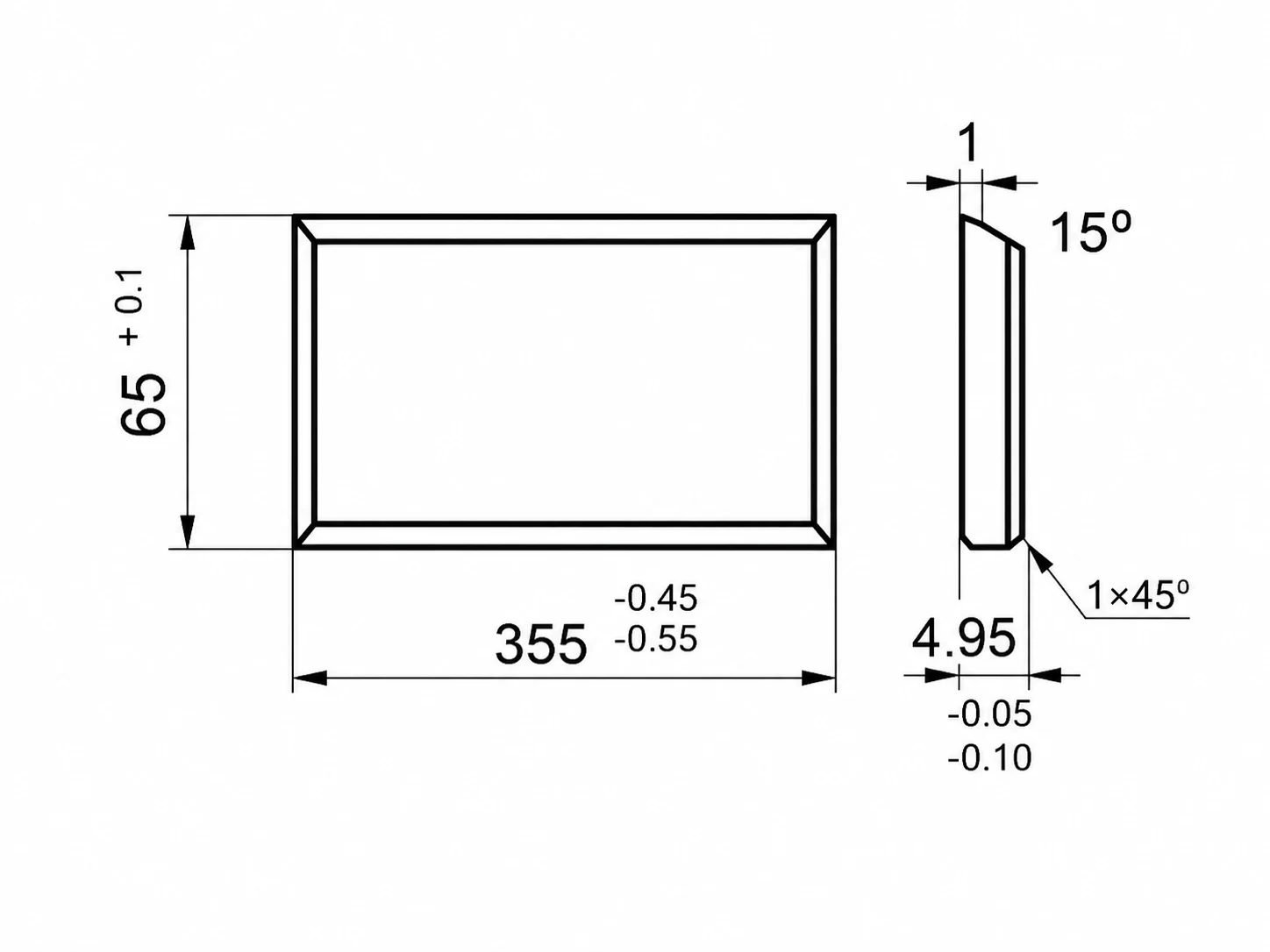
Why Edge Geometry Matters
Edge geometry influences entry into the rotor slot, contact with the cylinder, running-in, stress concentration, and installation orientation.
Reproduce the verified OEM drawing or approved sample geometry rather than applying a generic vane-edge design.
Graphite Vane and Rotor-Slot Fit
Vanes must move freely within the rotor slot. The fit should allow radial vane movement, thermal expansion, and wear compensation while avoiding excessive looseness, binding, jamming, tilting, or impact loading.
Required evaluation: Rotor-slot width, depth, rotor diameter, slot condition (wear, burrs, deposits, corrosion, previous vane fragments). Final tolerances should follow the approved drawing or verified pump specification.

Cylinder Surface Condition
Vane performance also depends heavily on the surface against which the vane slides. A new graphite vane cannot compensate for a severely damaged rotor, slot, or cylinder surface.
- Check for scratches, scoring, or grooves.
- Inspect for deposits, corrosion, or foreign particles.
- Evaluate general wear, runout, or geometry issues.
- Look for damage from previous broken vane fragments.

Identifying Replacement Graphite Vanes
By Pump Model
Provide manufacturer, model, and serial number.
By OEM Part Number
Provide existing vane or service-kit reference.
By Dimensions
Provide L, H/W, T, and edge geometry.
By Existing Grade
Provide grade marking, supplier, or data sheet.
By Physical Sample
Send a physical new or worn vane sample.
By Drawing
Upload the original or existing CAD/PDF drawing.
What Can a Worn Graphite Vane Tell Us?
A worn graphite vane is useful for replacement identification, but it is not always a complete manufacturing specification.
Usually Visible
- • Thickness and Length
- • Remaining height / width
- • Basic body shape and edge features
- • Grooves, holes, or visible markings
- • Wear pattern, chipping, or fracture direction
May Be Missing
- • Original unworn dimension & wear limit
- • Exact material grade & properties
- • Original tolerance & surface finish
- • Correct quantity per set
- • Pump operating history
Finished Graphite Vane Manufacturing
CARBOLVE machines finished vanes from verified materials through controlled processes.
- 1 Material Confirmation: Confirm and identify the approved graphite/carbon material.
- 2 Blank Preparation: Cut suitable graphite blanks to approximate dimensions.
- 3 Precision Machining: Grind and machine length, height/width, thickness, flatness, and parallelism.
- 4 Edge & Feature Finishing: Machine chamfers, radii, grooves, or holes according to drawing.
- 5 Packaging: Protect brittle graphite edges and surfaces for shipment.
Quality Control
Inspection procedures verify the agreed specification before shipment.
Dimensional Inspection
Measure length, height/width, thickness, and edge geometry against approved drawing.
Geometry
Verify flatness, parallelism, and squareness where required.
Surface
Check for cracks, chips, edge damage, scratches, and contamination.
Vane Set
Check quantity, dimensional consistency, identification, and packaging.
Graphite Vane Material & Application Comparisons
Graphite Vanes vs Fiber Vanes
| Factor | Graphite Vane | Fiber / Fiber-Composite Vane |
|---|---|---|
| Material direction | Graphite/carbon sliding material | Reinforced composite |
| Application direction | Many dry-running pumps | Selected lubricated or specialized pumps |
| Lubrication | Frequently dry-running application | Pump-design dependent |
Do not replace a fiber vane with graphite solely because the dimensions are identical.
Graphite Vanes vs Resin Vanes
Some rotary vane systems use resin or resin-composite vane materials. They differ in material structure, lubrication requirements, mechanical/thermal properties, and wear behavior. Graphite is not universally superior; it must match the pump design.
Graphite Vanes vs Carbon Composite
A graphite vane is generally based on a graphite/carbon material system. A carbon composite vane may incorporate fibers, resin, and carbon reinforcement depending on the manufacturer. Do not classify every carbon-colored vane as graphite.
Graphite Vane Troubleshooting Guide
Graphite vane problems may originate from the wider vacuum-pump system rather than the vane alone.
| Symptom | Possible Contributing Factors | What to Check |
|---|---|---|
| Reduced vacuum | Worn vane, leaks, filter, cylinder wear | Vane + system |
| Rapid vane wear | Dust, surface damage, material, heat | Environment + pump |
| Broken vane | Sticking, foreign material, impact, geometry | Rotor slot |
| Vane sticking | Dust, moisture, wrong thickness, deposits | Slot + vane |
| Edge chipping | Impact, installation, slot/cylinder damage | Edge + slot |
| Replacement does not fit | Wrong model/dimensions, worn sample | Drawing + slot |
Frequently Asked Questions
Do graphite vanes require oil?
Are graphite vanes used in oil-lubricated vacuum pumps?
Can two graphite vanes with identical dimensions use different materials?
Can CARBOLVE reproduce a worn graphite vane?
How many graphite vanes are used in a rotary vane pump?
Should all graphite vanes be replaced together?
What is the minimum graphite vane size before replacement?
Request a Graphite Vane Quote
Complete dimensional, material, pump, mechanical and process information helps CARBOLVE evaluate the vane specification.